Dogs
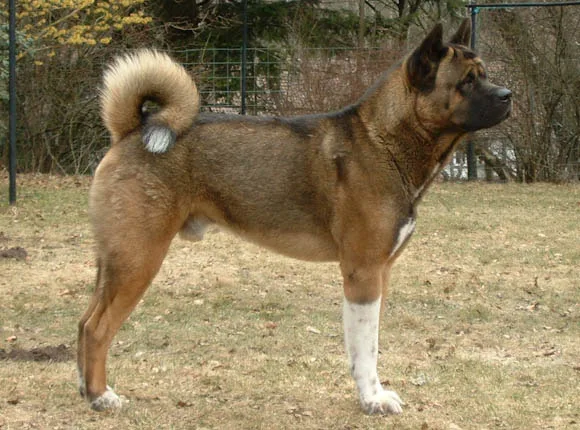
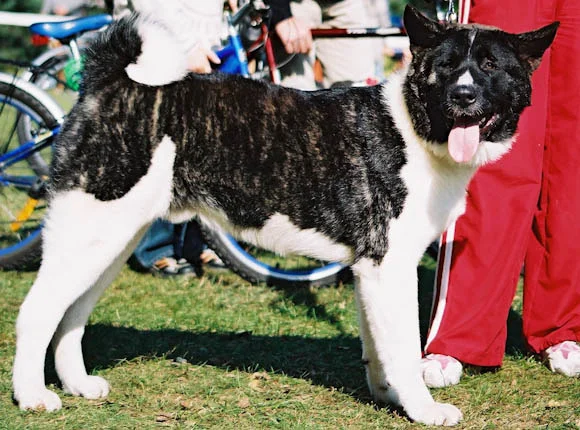
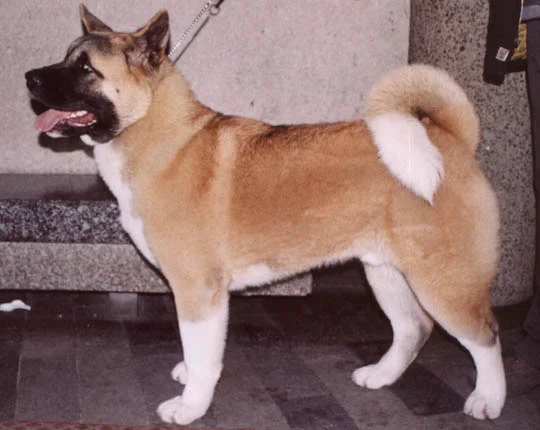
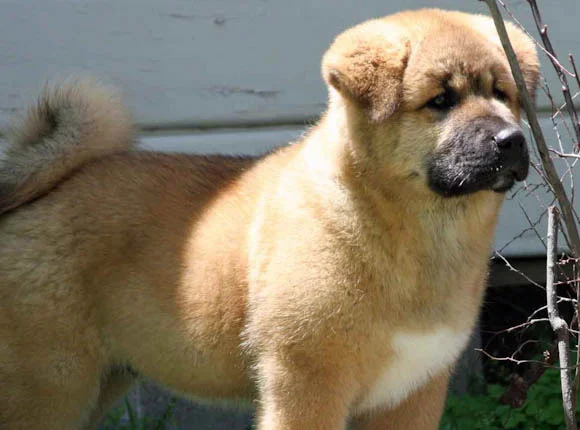
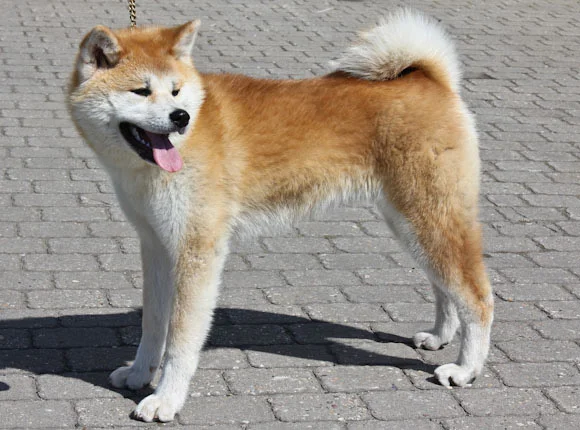
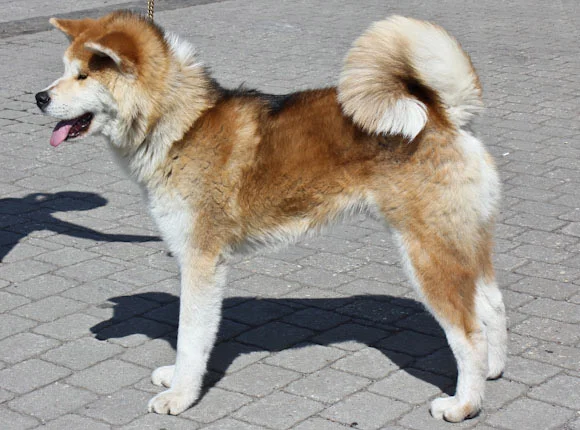
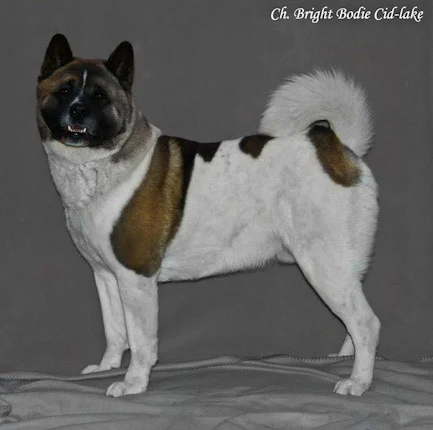
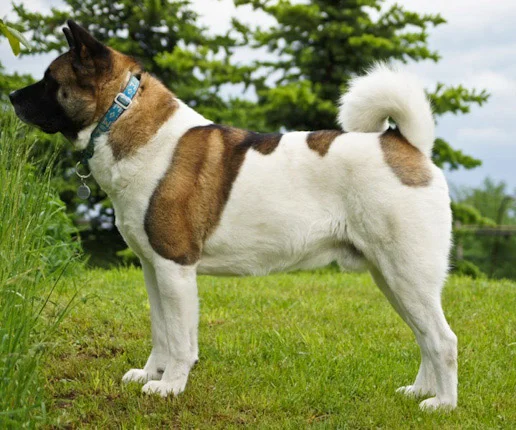
Akita
Other names: Grande Cão Japonês, Japanese American Akita, Shishi Inu, Akita Inu, Japanese Akita, American Akita, Great Japanese Dog
Hunting, tracking, watchdog, guarding, police work, military work, sledding.
- Origin
- Japan
- Size
- Large
- Height · Male
- 64–70 cm
- Height · Female
- 58–64 cm
- Weight · Male
- 49–59 kg
- Weight · Female
- 31–41 kg
- Life expectancy
- 10–12 years
- Litter
- 5–7 puppies
- FCI
- FCI group 5 · 5 · n.º 255
- AKC
- Working Group · #44
Traits
Activity
Social
At home
Care
Training
Guarding
Temperament
The temperament is composed, faithful, docile and receptive.
History
Originally Japanese dogs were small to medium in size and no large breeds existed. Since 1603 in the Akita region, Akita Matagis (medium-sized bear-hunting dogs) were used as fighting dogs. From 1868 Akita Matagis were crossed with Tosas and Mastiffs. Consequently, the size of this breed increased but characteristics associated with Spitz type were lost.
In 1908 dog fighting was prohibited, but this breed was nevertheless preserved and improved as a large Japanese breed. As a result, nine superior examples of this breed were designated as « Natural Monuments » in 1931.
During World War II (1939-1945), it was common to use dogs as a source of fur for military garments. The police ordered the capture and confiscation of all dogs other than German Shepherd Dogs used for military purposes. Some fanciers tried to circumvent the order by crossbreeding their dogs with German Shepherd Dogs.
When World War II ended, Akitas had been drastically reduced in number and existed as three distinct types; 1) Matagi Akitas, 2) fighting Akitas, and 3) Shepherd Akitas. This created a very confusing situation in the breed.
During the restoration process of the pure breed after the war., Kongo-go, a dog of the Dewa line, which exhibited characteristics of the Mastiff and German Shepherd
However, sensible learned fanciers did not approve of this type as a proper Japanese breed, so they made efforts to eliminate the strain old foreign breeds by crossbreeding with Matagi Akitas for the purpose of restoring the original pure breed. They succeeded in stabilizing the pure strain of large sized breed as known today.
Care
The Akita appreciates mental and physical exercise every day. He needs the chance to run in a safe area or on leash for a long jog. Given ample exercise and training, he can be a quiet and well-mannered house dog. The Akita is happiest if he can spend most of his time with his family. The coat needs brushing about once a week to remove dead hair, more often when shedding. Akitas tend to be somewhat messy drinkers!
The Akita does not require an over-abundance of exercise. They are moderately active indoors. They enjoy play sessions with their family or other family activities. However, they will become bored and destructive if left alone for extended periods of time either inside or outside. They enjoy a daily walk, but it is vitally important they are very securely leashed and kept from encountering other dogs. They are not well suited for apartment dwellings and do best in a home with a large securely fenced yard.
Fenced yard, leash, socialization, and training.
Health
The Akita requires significant grooming with a firm bristle brush on a daily basis. Bathing should only be done when absolutely necessary with a mild shampoo to prevent stripping the coat of the natural oils. It is important to keep the hair on the bottom of the paws trimmed to preserve their characteristic of webbed feet. They are prone to hip dysplasia, hypothyroidism, eye problems, and lupus.
Training
The training of this dog must be done by a person with experience, confident and the training must be firm, consequent, varied for not getting the dog bored. It is an intelligent dog and beautiful results can be get. It needs to be socialized since an eraly age with children, with people, with other dogs and other animals. It has a medium level of activity and it likes to take long walks.
Coat & grooming
The fur of this dog requires a brushingmore oftenduring the moulting period to remove the dead hair bristles. In the rest of the time, a casual brushing is enough.
Fun facts
Very aggressive to other dogs and animals and should therefore never be allowed to run off lead around other animals. Should definitely be supervised with other household pets and children. Although the breed may tolerate children from his own family, he