Dogs
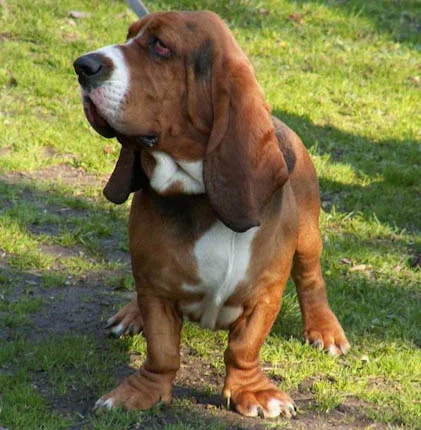
Basset Hound
Other names: Bassê, Basset
Hunting and tracking.
- Origin
- France
- Size
- Small
- Height · Male
- 35–38 cm
- Height · Female
- 33–36 cm
- Weight · Male
- 36–30 kg
- Weight · Female
- 23–29 kg
- Life expectancy
- 8–12 years
- Litter
- 8–10 puppies
- FCI
- FCI group 6 · 6 · n.º 163
- AKC
- Hound Group · #25
Traits
Activity
Social
At home
Care
Training
Guarding
Temperament
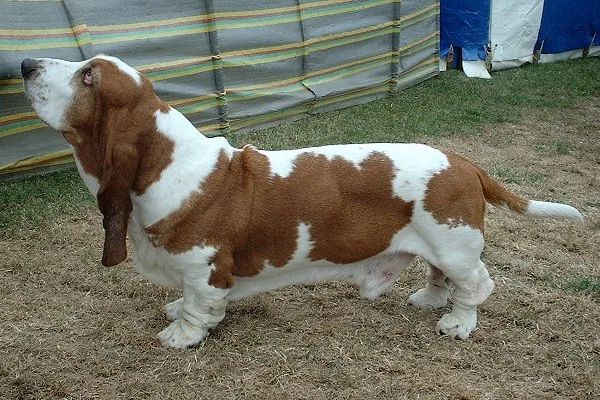
Tenacious hound of ancient lineage which hunts by scent, possesses a pack instinct and a deep melodious voice. Placid, never aggressive or timid. Affectionate.
History
The Basset was reputedly bred by monks in France in the Middle Ages to hunt in heavy cover and is able to hold its nose close to the ground. Though closely related to the entire family of French Bassets the breed was developed to perfection in Britain. He is a dog capable of hunting his natural prey, the hare, persistently at a relatively slow pace over prodigious distances.
Care
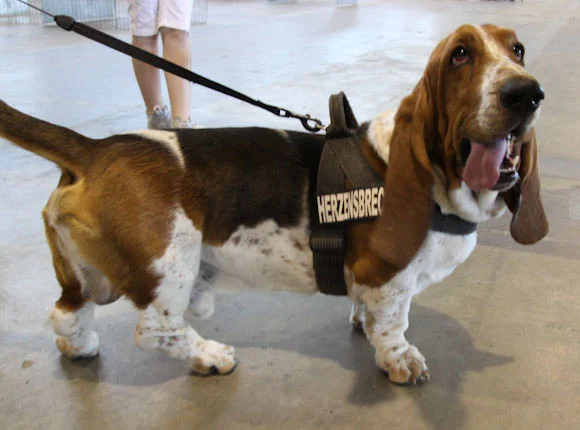
The Basset needs mild daily exercise, which can be satisfied by walking on leash or playing in the yard. He does best as a house dog with access to a yard. His coat needs only minimal grooming, but his face may need regular cleaning around the mouth and wrinkles. Bassets tend to drool.
Basset Hounds have the tendency to overeat therefore should be given plenty of exercise to keep him healthy. Normally a lazy breed, this dog should be taken on regulated walks and should be allowed a free roam in a safe, fenced in area.
Slow-paced but long lasting exercise such as walks, a fence to keep from wandering.
Health
Combing and brushing with a firm bristle brush should keep shedding to a minimum as this breed sheds constantly. Toenails should be trimmed regularly as this breed is lazy which can neglect the nails. Cleaning under the folds of skin works best, and the ears should be cleaned regularly.
Training
The training must be made with patience and to be firm, consequent, to make it respod to the commands, because it has an independant demeanour. It must be thought since an early age to respond to at call because it likes to roam by itself.
Coat & grooming
The detached hair will be removed with a rubber brush. The claws will be kept short and the ears clean. The folds of the skin must be kept clean for not getting infected. They have the tendincy to eat a lot and they get fat. The cubs must be well feed and not be pushed with long walk for not influencingtheir growth. It has a low level of activity and it's contented with short walks.
Fun facts
Tends to put on weight, and is somewhat lazy, so care must be taken to provide exercise and avoid overfeeding. May follow a scent trail oblivious to his surroundings. The Basset must have a fenced yard. The long, droopy ears need regular cleaning and atte