Dogs
Bichon Maltiase
Other names: Bichon Maltiase, Maltese, Malteser, Bichon Maltais, Terrier maltês, Bichoy Maltaise, Couton, Mini
- Origin
- Malta
- Size
- Toy
- Height · Male
- 21–25 cm
- Height · Female
- 20–23 cm
- Weight · Male
- 3–4 kg
- Weight · Female
- 2–3 kg
- Life expectancy
- 12–14 years
- Litter
- 2–4 puppies
- FCI
- FCI group 9 · 9 · n.º 65
- AKC
- Toy Group · #20
Traits
Activity
Social
At home
Care
Training
Guarding
Temperament
The Maltese is gentle, trusting, and obedient. They are typically good natured and amiable and love to be held and cuddled. They will tolerate other pets, but are not suitable for inconsiderate or ill-behaved children. They most often will establish a close bond with one person. They do not do well when left alone for extended periods of time. They may be over-protective of their owner, family, and territory, and bark or bite if they perceive a threat. They are a fearless, vigorous, and agile breed. The Maltese commit themselves fully to their owner and families.
History
His name does not signify that he originates from the island of Malta, because the adjective « Maltese » comes from the Semitic word « màlat » which means refuge or harbour; this Semitic root comes up again in a whole series of names of maritime places; i.e. in the name Adriatic island of Méléda, the Sicilian town of Melita and also in that of the island Malta. The ancestors of this little dog lived in the ports and maritime cities of central Mediterranean, where they hunted mice and rats which were found in profusion in the harbour warehouses and in the hold of ships. In his list of dogs existing at the time of Aristote (384 322 B.C.) he mentions a breed of little dogs to which he attributes the Latin name « canes melitenses ». That dog was known in Ancient Rome : favourite companion of the matrons, has been praised by Strabon, Latin poet of the first century A.D. Representations of the Maltese by numerous Renaissance painters show this little dog in the salons of the period at the side of beautiful ladies of the time.
Care
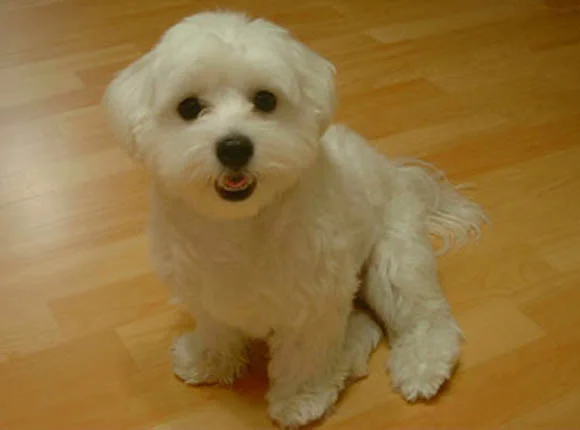
The exercise requirements of the Maltese are easily met with indoor games, a romp in the yard or a short walk on leash. Despite her coat, the Maltese is not an outdoor dog. The coat needs combing every one or two days. The white coat may be difficult to keep clean in some areas. Pets may be clipped for easier care.
The Maltese does not require a high level of exercise. They are suitable for apartment or condominium living. They enjoy a daily walk, indoor play sessions, or a romp and run in a secured small yard. The Maltese loves to be social, so a play date at the park is always welcomed. They must be supervised and securely leashed.
Attention, grooming and socialization.
Health
The Maltese coat requires daily brushing and combing to prevent matting. The coat is extremely soft and silky, so gentle care is highly recommended. They need to be bathed or dry shampooed on a regular basis. The eyes need daily cleaning to prevent staining. It is also important to keep their ears clean and free from stray hair. They may be prone to eye problems, skin disorders, and respiratory problems. The Maltese do not do well in very hot climates or damp conditions. They may be finicky eaters and suffer indigestion. Dental hygiene is important to prevent tooth loss.
Training
It is an intelligent dog which wants to make pleasure to its master, it is sensitive, therefore the training is easy to made. It has to be gentle and consistent.
Coat & grooming
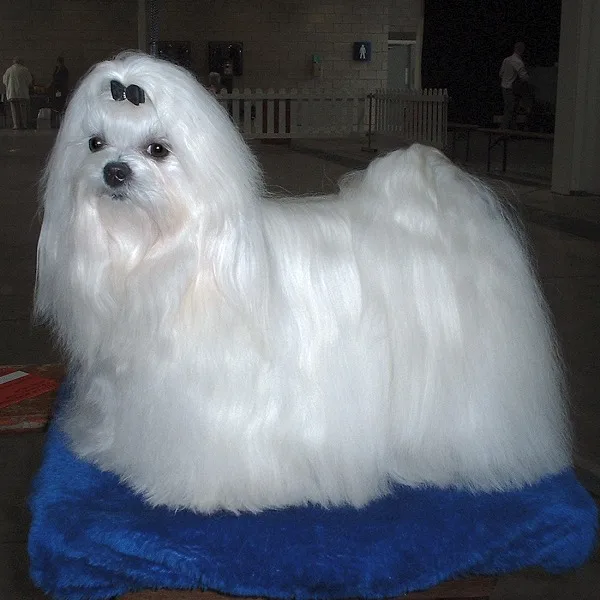
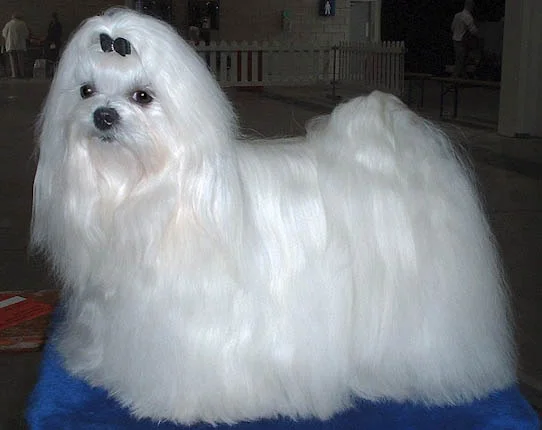
The fur requires daily to be brushed and combed and it needs to be regularly washed. The excessive hair grown over the eyes, the ears, among the pads, should be removed. It doesn't normally moult, but the dead hair bristles are removed by brushing. The hair from the head can be tied with a ribbon or bow, not to cover the eyes. The tears spots can be removed if they are not aesthetic with special solutions.