Dogs
Black Russian Terrier
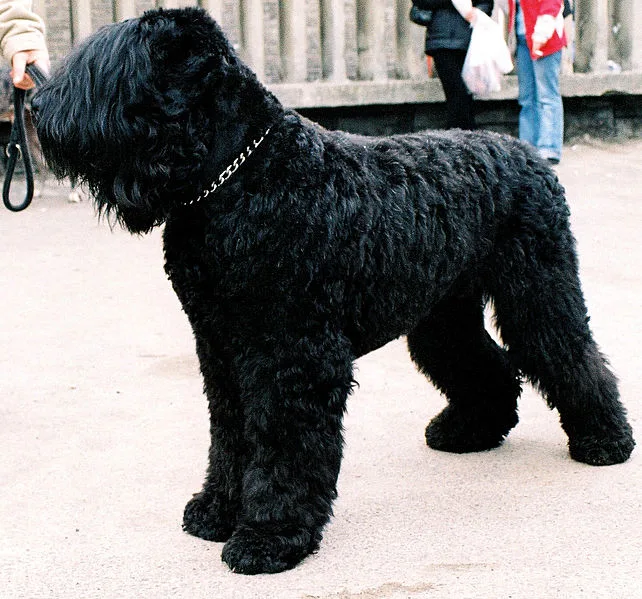
Other names: Blackies, Chornyi Terrier, Terrier Noir Tusse, Russkji Tchornji Terrier, Black Terrier, Russian Bear Schnauzer, Chornyi,
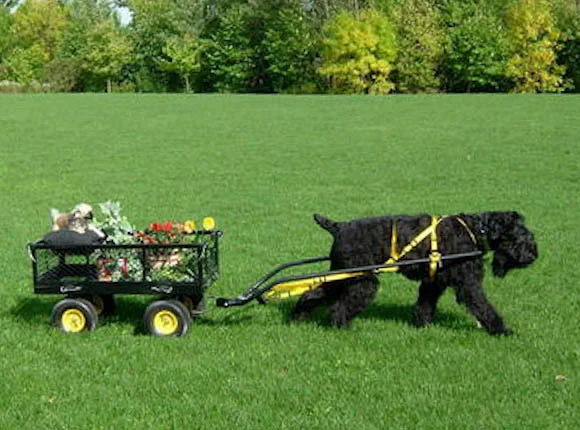
Watchdog, guarding, police, search and rescue, tracking, retrieving, sledding, agility, obedience, Schutzhund, tricks.
- Origin
- Russia
- Size
- Giant
- Height · Male
- 70–78 cm
- Height · Female
- 66–74 cm
- Weight · Male
- 50–60 kg
- Weight · Female
- 45–50 kg
- Life expectancy
- 10–14 years
- Litter
- 6–12 puppies
- FCI
- FCI group 2 · 2 · n.º 327
- AKC
- Miscellaneous Class
Traits
Activity
Social
At home
Care
Training
Guarding
Temperament
A dignified and confident dog; well controlled in all situations. When circumstances require, he immediately assumes an active-defensive posture, however, quickly calms down at the disappearance of threat. This handsome breed is amiable and has great endurance; it is undemanding, smart and friendly. It adapts well to training and various climate conditions and is hard working and reliable.
History
: The Russian Black Terrier was created in Russia during the late 1940s and the early 1950s by selective interbreeding of breeds like the Rottweiler, Giant Schnauzer, Airedale Terrier and Newfoundland Dog. The Giant Schnauzer is considered to be the main ancestor of the breed. The initial breeding was supervised by the military cynological school outside Moscow and the dogs were based in their kennels named ?Red Star?. The aim of the creators of the breed was the development of a large, brave, strong and manageable working dog with pronounced guarding instinct; a dog which could be useful for many services and adapts well to various climate conditions. The breed was recognized by the FCI in 1984.
Care
This breed will do well in urban, suburban or country setting with reasonable amounts of exercise. Black Russian Terriers are happiest when doing some type of work, such as playing games, agility, obedience, or protection. Over-exercising when young can cause damage to growing bones, joints, and muscles.
Health
Weekly grooming with a brush and comb is required. The ears, nails and teeth require ample attention. Scissoring or clipping for a Black Russian Terrier is sufficient 3-4 times a year.
Fun facts
Black Russian Terriers have adapted well to apartment living with sufficient exercise. More and more of these dogs are available in the United States. Be very careful to get multiple references or contact a national breed club before buying a dog because