Dogs
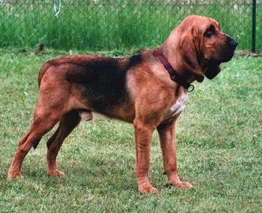
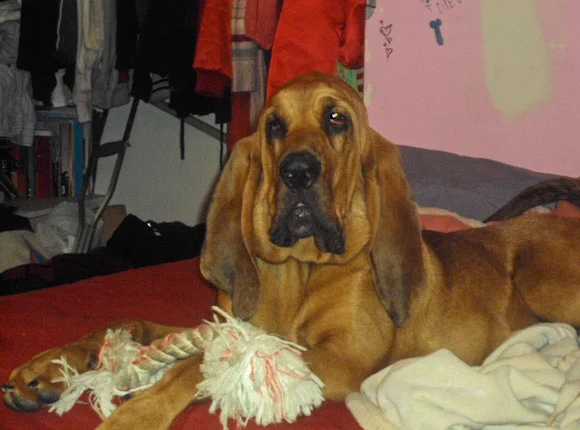
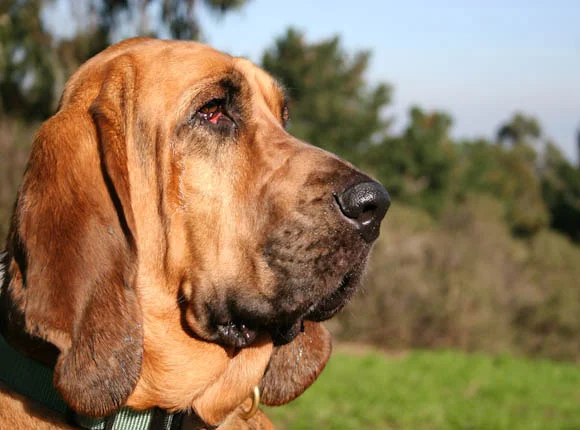
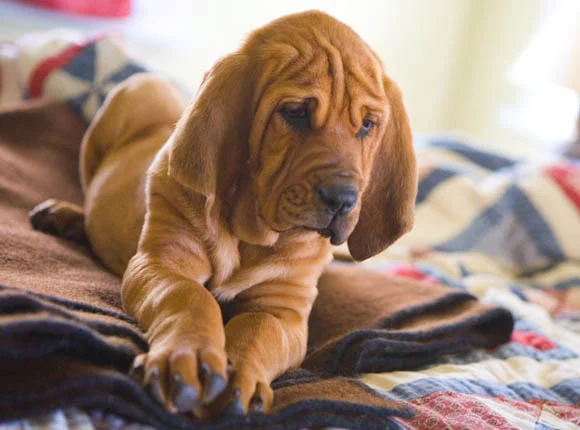
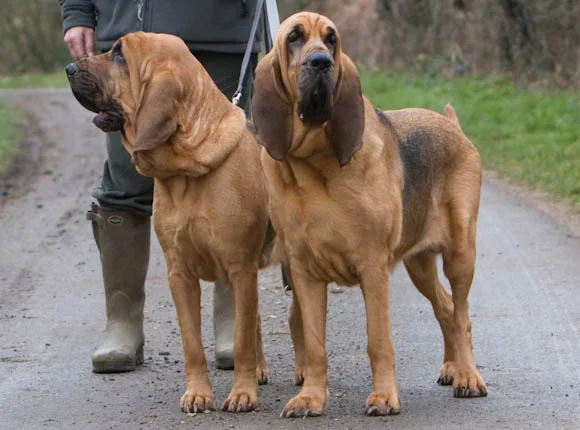
Bloodhound
Other names: Bloodhound, St. Hubert´s Hound, Chien de Saint Hubert, Sleuth hound, Bluthund
Hunting, tracking, man trailing, police scent work, narcotics detection, search & rescue.
- Origin
- Belgium
- Size
- Large
- Height · Male
- 62–72 cm
- Height · Female
- 58–66 cm
- Weight · Male
- 46–54 kg
- Weight · Female
- 40–48 kg
- Life expectancy
- 7–10 years
- Litter
- 7–8 puppies
- FCI
- FCI group 6 · 6 · n.º 84
- AKC
- Hound Group · #49
Traits
Activity
Social
At home
Care
Training
Guarding
History
Large scent hound and excellent leash hound, with very ancient antecedents. For centuries it
has been known and appreciated for its exceptional nose and its great talent for the hunt. It was bred in the Ardennes by the monks of the Abbaye de Saint-Hubert. It is presumed to descend from black or black and tan hounds hunting in packs which were used in the 7th century by the monk Hubert, who was later made a bishop and who when canonised became the patron saint of hunters. These big scent hounds spread throughout the Ardennes, due to the presence of large game, sheltering in the widespread forests of the region. These Saint- Hubert hounds were famed for their robustness and their endurance, especially when hunting wild boar.
The first Saint-Hubert hounds were black but later black and tan was also to be found. In the 11th century these dogs were imported into England by William the Conqueror. At the same time, dogs of the same type but with an all-white coat, called Talbots, were also introduced there.
In England the imported dogs provided the basic root stock. The progeny of these Bloodhounds received their name as a derivation of " blooded hound " which means a dog of pure blood, therefore a pure-bred.
Subsequently the breed was also developed in the United States of America. In the Southern States especially, these dogs were used for hunting runaway slaves.
Care
As a hunting hound, the Bloodhound needs a good deal of daily exercise. He was bred to trail through any hardship, and once on a trail he cannot be called off. He thus must be exercised in a safe area. The Bloodhound drools a lot, so his facial wrinkles require daily cleaning; the ear tips drag in food and must also be kept clean. The ear canals also need regular cleaning for good health. Coat care is minimal, requiring only occasional brushing or wiping. Most do best as indoor/outdoor dogs; note, however, that this is not the breed for people obsessed with cleanliness in the house!
Attention, ear cleaning, exercise, fenced yard and a leash.
Training
It is a dog a bit stubborn and independent and that's why it's hard to train. The person that takes care of the training must have experience, a lot of patience and to be consequent. The dog must be taught since an early age to come at the call for not going by itself, because it has that habbit when it feels the prey smell.
Coat & grooming
The fur must be occasionally brushed to remove the dead hair bristles. The ears must be groomed permanently for not getting infected from the dust or dirt. The same for the face folds must be groomed.
Fun facts
Has a tendency to bay, snore, and drool a lot. May also sniff excessively or wander off on the trail of an intriguing scent. Purchase only from OFA stock, as the breed tends to hip dysplasia. Eye problems due to eyelids turning in or out are common, as is