Dogs
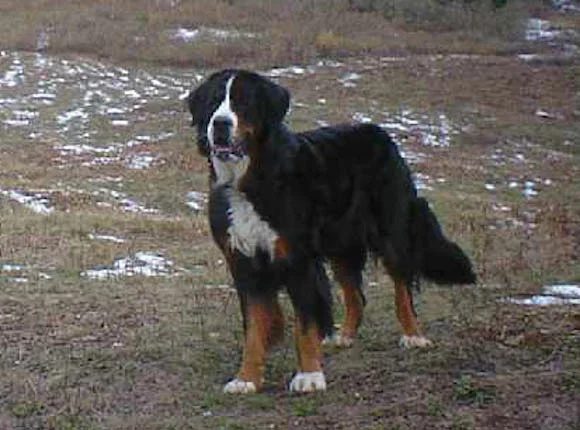
Bouvier Bernois
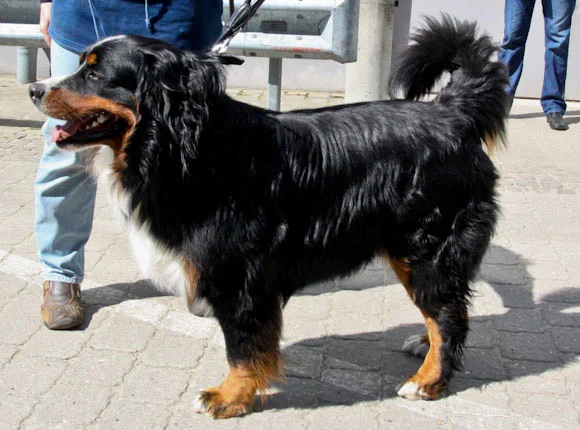
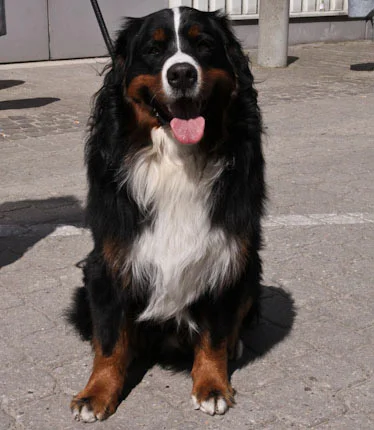
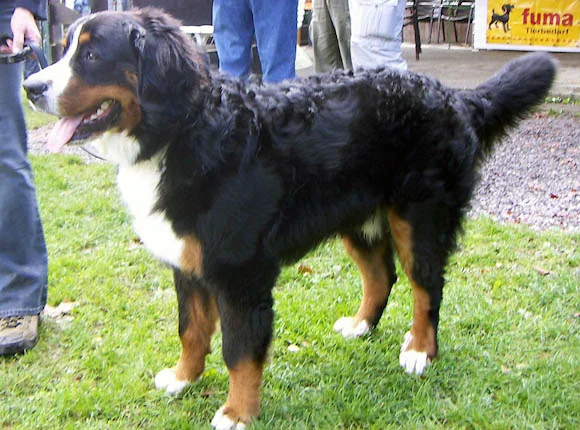
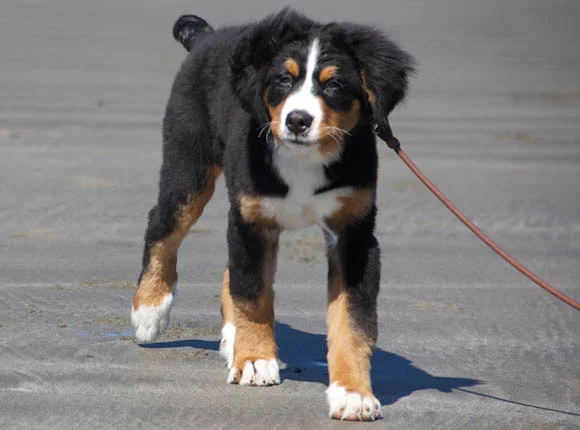
Other names: Bouvier Bernois, Berner Sennenhund, Berner, Bernese, The Little Bear of Switzerland, Berner \n
Herding, watchdog, guarding, search & rescue, carting
- Origin
- Switzerland
- Size
- Large
- Height · Male
- 64–70 cm
- Height · Female
- 58–66 cm
- Weight · Male
- 35–60 kg
- Weight · Female
- 35–60 kg
- Life expectancy
- 7–9 years
- Litter
- 4–10 puppies
- FCI
- FCI group 2 · 2 · n.º 45
- AKC
- Working Group · #47
Traits
Activity
Social
At home
Care
Training
Guarding
Temperament
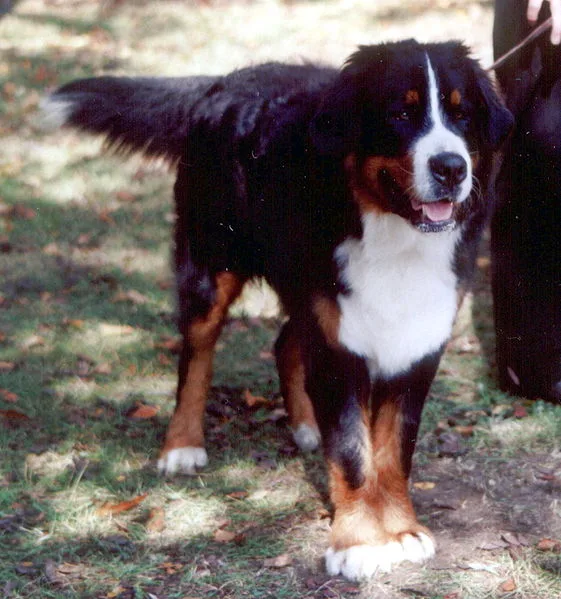
This breed is by nature, loving and alert. They are generally tolerant, sweet, and gentle. The Bernese Mountain Dog is typically excellent with children. However, since they are a large breed, they should never be left unsupervised with small children or children unknown to the dog. They thrive on human companionship and activity and may develop behavioral problems if they are deprived of social interaction. The Berner is protective but is not aggressive unless threatened or provoked. They may be aloof to strangers and have a tendency to be shy. This breed is a devoted indoor member of the family and a willing outdoor helper.
History
The Bernese Mountain Dog is a farm dog of ancestral origin which was used as a guard and draught dog and for driving cattle in the prealpine regions and in the midland areas around Bern. Originally he was named ?Dürrbächler? according to the name of the hamlet and of the inn of Dürrbach, near Riggisberg in the Canton Bern where these long-haired tricoloured farm dogs were especially numerous. In 1902, 1904 and 1907 specimen of this breed had already been exhibited at dog shows, and in 1907 some breeders of the region of Burgdorf decided to promote the pure breeding of these dogs by founding the ?Schweizerischer Dürrbach-Klub?, and fixing the characteristic traits of the breed. In 1910, at a show in Burgdorf where many farmers of that region brought their Dürrbächler dogs to, already 107 specimen were shown. From that day onward this dog, renamed ?Bernese Mountain Dog? following the example of the other breeds of Swiss Mountain Dogs, became rapidly appreciated all over Switzerland and in the neighbouring parts of Germany. Today the Bernese Mountain Dog is well known and appreciated all over the world as a family dog thanks to its striking tricoloured coat and its great adaptability.
Care
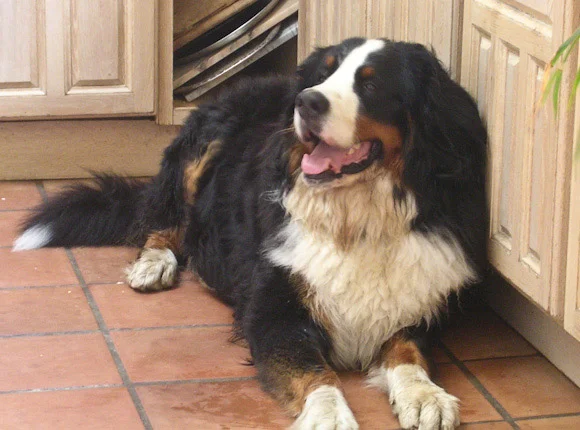
This dog enjoys the outdoors, especially in cold weather. He needs daily but moderate exercise, either a good hike or a walk on leash. He is so in tune with his human family that he cannot be relegated to life alone in the yard. Inside, he needs plenty of room to stretch out. His coat needs brushing one or two times weekly, much more often when shedding. The Bernese life span is described by a Swiss expression: "Three years a young dog, three years a good dog and three years an old dog. All else is a gift from God."
The Bernese Mountain Dog needs an inordinate amount of exercise, interaction, and activity. They require a minimum half hour of vigorous exercise daily as well as several outside trips. They are not recommended for apartment dwelling, as they need a securely fenced large yard to run and play. They excel in conformation, obedience, tracking, herding, and agility.
Grooming, socialization, and training.
Health
The Bernese Mountain Dog requires daily brushing, with extra care needed during their heavy seasonal shedding. A periodic bath or dry shampooing is recommended. They are typically a hardy breed, but may have a tendency to suffer from elbow or hip dysplasia, cancer, bloat, or eyelid problems. Their size and thick coat make them highly susceptible to heat stroke.
Training
It is an easy to train dog because, because it is intelligent and responsive. The training must be well-balanced, firm without being severe or rough, consequent. It is sensitive to the tone of the voice and it easily understands its tasks. It likes to run and play free.
Coat & grooming
It needs to be brushed regularly for not letting the hair to get tangled. During the moulting period it will be brushed more often.
Fun facts
Don't over feed. This breed needs room to exercise so he does best in the suburbs or rural areas. Best with a large fenced yard. The thick coat makes the Bernese uncomfortable in warm weather. Cancer, especially mast cell tumors and malignant histiocytosi