Dogs
Czech Terrier
Other names: Czech Terrier, Bohemian Terrier, Cesk
hunting, companion
- Origin
- Czech Republic
- Size
- Small
- Height · Male
- 27–32 cm
- Height · Female
- 25–30 cm
- Weight · Male
- 6–10 kg
- Weight · Female
- 6–10 kg
- Life expectancy
- 10–14 years
- Litter
- 2–6 puppies
- FCI
- FCI group 3 · 3 · n.º 246
Traits
Activity
Social
Training
Guarding
Temperament
Balanced, non-aggressive, pleasant and cheerful companion, easy to train; somewhat reserved towards strangers; of calm and kind disposition.
History
The Czech Terrier is the result of an appropriate crossbreeding between a Sealyham Terrier dog and a Scotch Terrier bitch, with the aim to develop a light, short legged, well pigmented hunting Terrier, with practical drop ears, easy to groom and easy to train. In 1949 Mr. Frantisek Hor k from Kl novice near Prague started to improve the breed by fixing their characteristics. In 1959 these dogs were shown for the first time, and the breed was finally recognized by the FCI in 1963.
Care
The Cesky Terrier breed does well in an apartment provided they are sufficiently exercised. They enjoy long walks, are good jogging companions, and enjoy free play in a securely fenced yard.
Grooming.
Health
Cesky Terrier's require coat trimming on a regular basis. Brushing and combing should be done twice weekly. Trimming of the hair in the ear passages and between the paw pads is necessary. The Cesky Terrier has no major hereditary diseases. They are prone to a non-life threatening issue known as Scottie Cramp which can restrict movement.
Training
This dog is easily to train because is intelligent, hardworking, submissive. It must be taught since an early age with people, other animals and other dogs. The training must be well-balanced, gentle and consistent. I likes to flutter, to play, to make long walks to varied places.
Coat & grooming
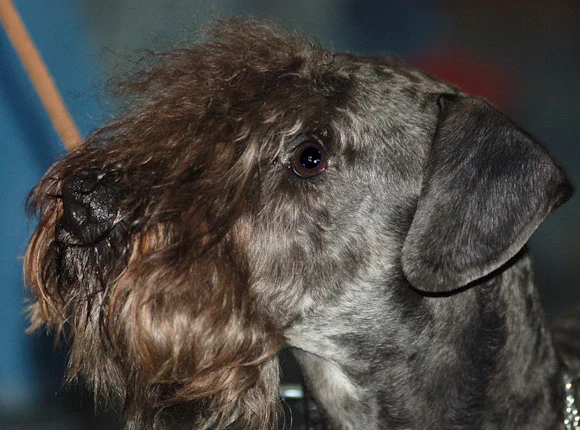
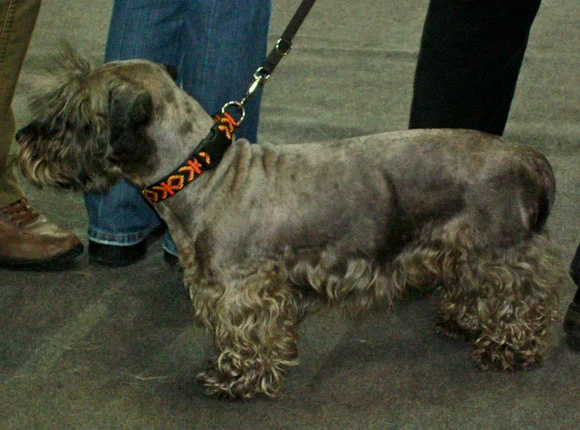
This dog is trimmed regularly (4 times per year) in some parts of the body: scruff, back, sides and neck. On legs, belly, whiskers, eyebrows and beard it will be let the natural hair. In these areas the hair should be brushed weekly or whenever it is necessary for not getting tangled. The hair grown in excess between the pads of the legs will be cut.