Dogs
Doberman
Other names: Doberman, Dobermann Pinscher, Dobe, Dobie, Doby, Thuringer Pinscher, Pliezeilich Soldatenhund
Tracking, watchdog, guarding, police work, military work, search & rescue, competitive obedience, agility, Schutzhund.
- Origin
- Germany
- Size
- Large
- Height · Male
- 68–72 cm
- Height · Female
- 63–68 cm
- Weight · Male
- 40–45 kg
- Weight · Female
- 32–35 kg
- Life expectancy
- 10–12 years
- Litter
- 3–8 puppies
- FCI
- FCI group 2 · 2 · n.º 143
- AKC
- Working Group · #22
Traits
Activity
Social
At home
Care
Training
Guarding
Temperament
The disposition of the Dobermann is friendly and calm; very devoted to the family it loves children. Medium temperament and medium sharpness (alertness) is desired. A medium threshold of irritation is required with a good contact to the owner. Easy to train, The Dobermann enjoys working, and shall have good working ability, courage and hardness. The particular values of self confidence and intrepidness are requied, and also adaptability and attention to fit the social environment.
History
The Dobermann is the only German breed which bears the name of its original breeder, Friedrich Louis Dobermann (02.01.1834 ? 09.06.1894).
He was believed to be a tax collector, offal abbatoir manager (knacker) and a part time dog catcher, legally able to catch all stray dogs. He bred with animals from this reservoir that were particularly sharp. The so called ?butcher?s dogs? which were already considered a relatively pure breed at that time, played a most important role in the origination of the Dobermann breed. These dogs were an early type of Rottweiler, mixed with a type of shepherd which existed in ?Thüringen? as a black dog with rust red markings. Herr Dobermann bred with this mixture of dogs in the Eighteen Seventies. Thus he obtained ?his breed? : not only alert, but highly protective working and housedogs. They were often used as guard and police dogs. Their extensive use in police work led to the nickname ?Gendarme dog?. They were used in hunting to control large vermin. In these circumstances it was a matter of course that the Dobermann was recognized officially as a Police Dog by the beginning of the century.
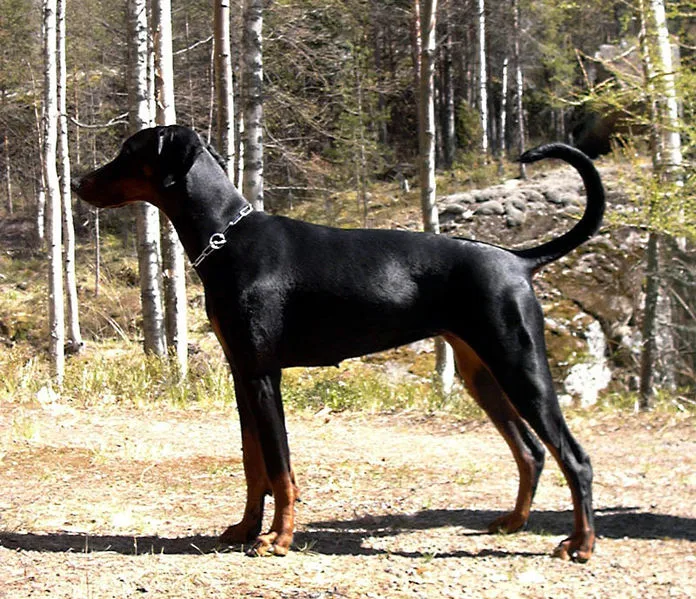
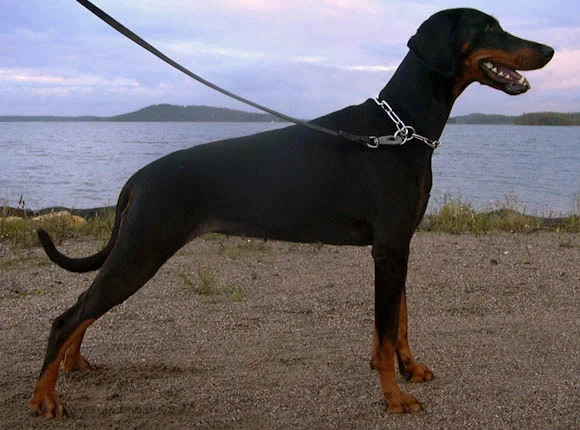
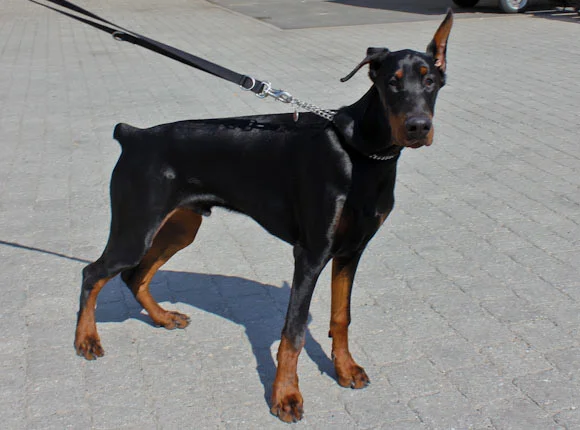
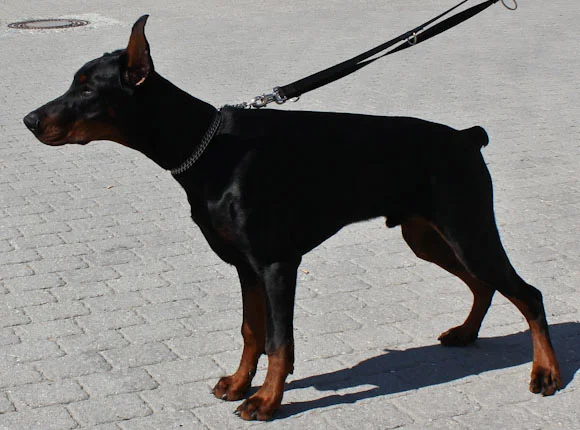
The Dobermann breed requires a medium sized, powerful, muscular dog. Despite his substance he shall be elegant and noble, which will be evident in his body line. He must be exceptionally suitable as a companion, protection and working dog and also as a family dog.
Care
This is an active breed that needs daily mental and physical exercise, lest she become frustrated or destructive. Her exercise requirements can be met with a long jog or walk on leash, or a strenuous run in a safe area. The Doberman is a better companion and effective guardian if she shares her human's home. Coat care is minimal.
Highly energetic, Doberman Pinschers require daily extensive exercise and stimulation. They enjoy family play sessions and make wonderful walking companions. This breed will do okay in an apartment provided they are sufficiently exercised. However, a securely fenced yard is best for romping and running freely.
Health
Doberman Pinschers require minimal grooming. Occasional brushing or wiping of the coat with a damp cloth will minimize loose hair. Dental hygiene is crucial to prevent early tooth loss. It is also important to keep their nails trimmed short. Bathing or dry shampooing should only be done when absolutely necessary. The Doberman Pinscher is prone to Wobbler Syndrome, Von Willebrands Disease, bloat, hip dysplasia, and congenital heart disorders. They do not do well in cold climates.
Training
This dog requires a person with experience in training dogs. The training must be gentle but firm without being rough and this dog must not be forced from an early age. If it is not properly trained, it either grow as coward or as an aggressive dog. Being a resistant, hefty dog, it enjoys swimming, running, and attending various canine activities.
Coat & grooming
The fur of this dog doesn't require too much care. A rough glove can be used to remove the dead hair bristles during the moulting period. It is recommended a regularly disinfection to avoid inflammations and irritations that can occur.
Fun facts
The Doberman is very energetic and needs thorough frequent exercise. The coat is easy to care for. Quality and personality characteristics of Dobermans are highly variable. Some breeders select for "sharpness" (aggressiveness) so choose a puppy with care.