Dogs
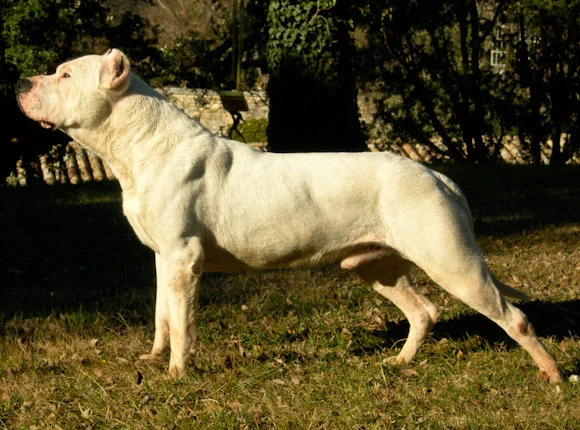
Dogo Argentino
Other names: Dogo Argentino, Argentine Dogo, Argentinian Mastiff, Argentinische Dogge, Dogue argentin
Hunting, tracking, watchdog, guarding, police work, narcotics detection, military work, competitive obedience, Schutzhund.
- Origin
- Argentina
- Size
- Large
- Height · Male
- 60–68 cm
- Height · Female
- 60–68 cm
- Weight · Male
- 40–45 kg
- Weight · Female
- 40–43 kg
- Life expectancy
- 11–12 years
- Litter
- 4–8 puppies
- FCI
- FCI group 2 · 2 · n.º 292
Traits
Activity
Social
At home
Care
Training
Guarding
Temperament
It should be silent, never barking on the trail, with a keen nose and excellent flair, vent, agile, strong, robust and especially brave.
Should never be aggressive toward humans, a feature that will be severely observed. It must give you love without conditions or reservations.
History
This breed is native to the province of Cordoba, in the Mediterranean region of Argentina.
Its creator was Dr. Antonio Nores Martinez, a prominent and active surgeon (1907 ? 1956).
His work was based upon the methodical crossbreeding of the ?Old Fighting Dog of Cordoba?, a breed of great power and strength, which was the product of crossbreeding among dog of the breeds Bulldogs and Bull Terriers.
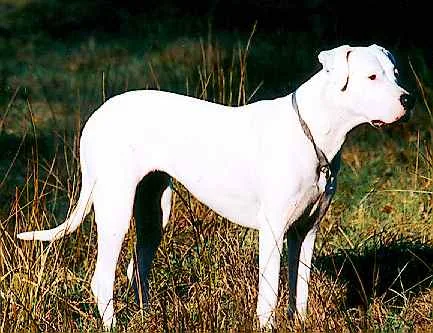
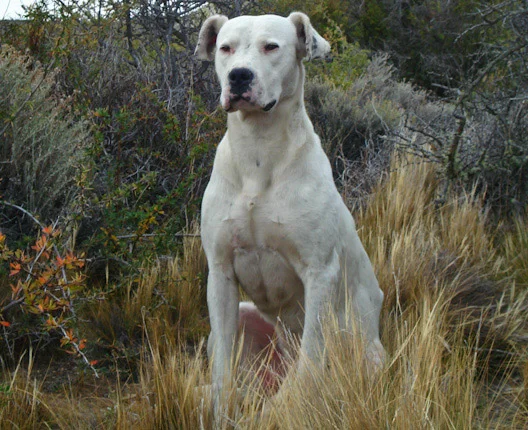
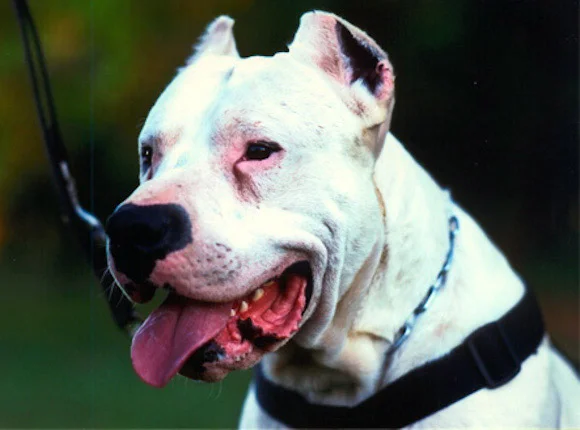
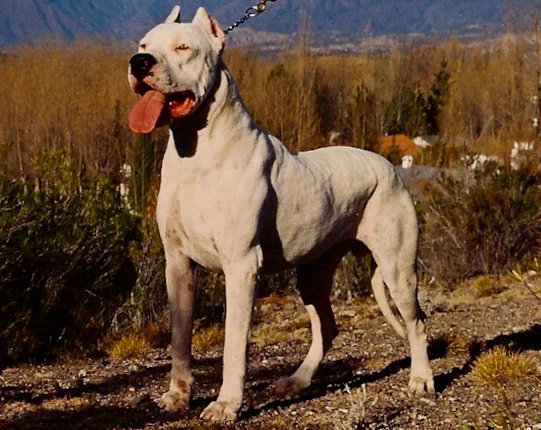
He selected completely white dogs for breeding, not undershot, with heavy heads and long muzzle.
After a thorough and minute character study and selection, through different generations, his aim was accomplished forming different families always using as a start the Old Fighting Dog of Cordoba which was crossed at first with English Bull Dog, Great Dane, Pyrenean Mastiff, Bull Terrier, Boxer, Pointer, Dogue de Bordeaux and Irish Wolfhound.
In 1947 the breed was already created and its genotype and phenotype were stabilized. The same year the breed standard was presented at the Hunter?s Club in the City of Buenos Aires.
Its strength, tenacity, sense of smell and bravery make it the best in the pack of dogs to hunt wild boars, peccaries, pumas and other predators of agriculture and livestock that inhabit the vast and diverse regions of Argentina. This is the traditional activity for which Antonio Nores created this breed.
In 1964 it was recognized as a breed by the FCA (Federación Cinologica Argentina) and the Sociedad Rural Argentina, which opened their studbook to initiate registry.
Just in 1973 the breed was accepted by the FCI. This was possible thanks to the great passion and unique work and effort of Dr. Agustín Nores Martínez, brother of the founder of the breed, who achieved this recognition not only because of his individual actions but also from the institutional action of the FCA and the Dogo Argentino Club ?Dr. Antonio Nores Martinez?.
It should be silent, never barking on the trail, with a keen nose and excellent flair, vent, agile, strong, robust and especially brave.
Should never be aggressive toward humans, a feature that will be severely observed. It must give you love without conditions or reservations.
Care
Argentine Dogo's thrive on athletic activity and vigorous exercise. They are not recommended for apartment living. They do best in a securely fenced yard. The Argentine Dogo's make good walking and jogging companions provided they are securely leashed and muzzled when in public.
Positive training, socialization, and sun protection.
Health
Weekly brushing is required to minimize loose and dead hair. Bathing should only be done when necessary using a mild shampoo or a shampoo formulated for white coats. Frequent nail clipping is required. The Argentine Dogo is relatively healthy, although deafness and hip dysplasia can occur.
Training
It must be made by a person with a lot of experience in raising dogs, to be consequent, well ballanced, but not harsh. To be used an gentle tone and a encouraging attitude when things are going well. An inadequate training can have unpredictible consequences.
Coat & grooming
The fur of this dog is easily to mantain. A casual combing is enough.
Fun facts
The single white coat is very easy to care for and does not have a doggy odor. Be sure to bring the Dogo inside when temperatures drop below freezing. Pay special attention to the nails, as they tend to grow very quickly and therefore need frequent clippi