Dogs
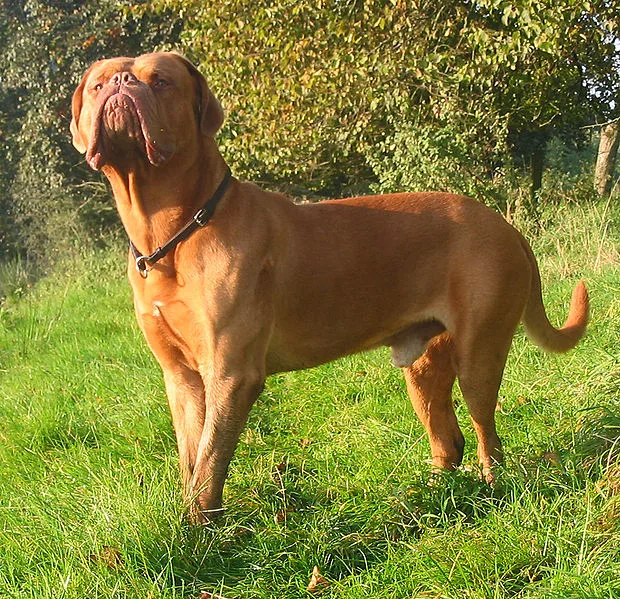
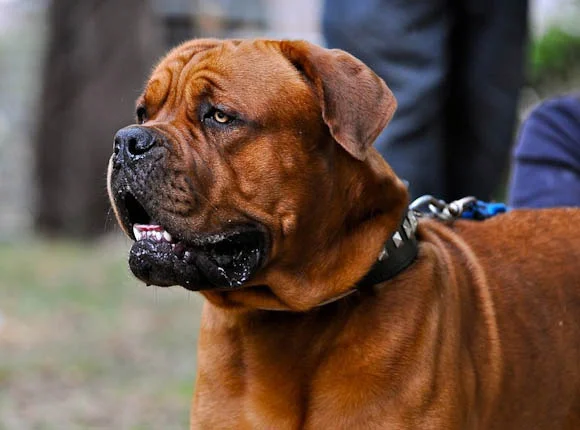
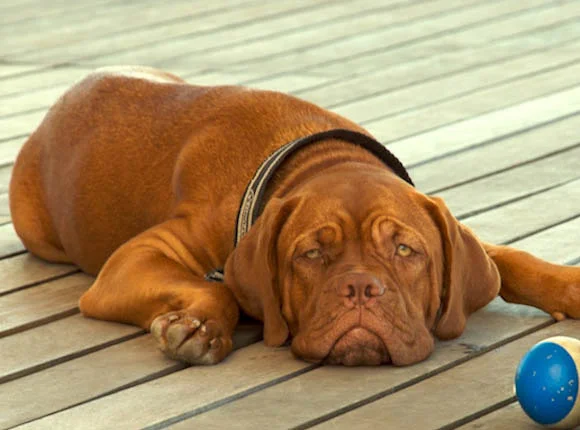
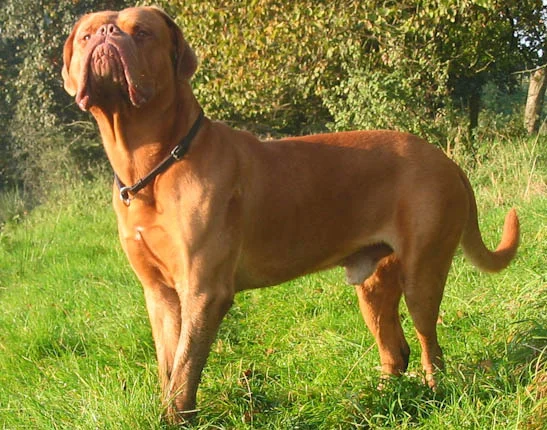
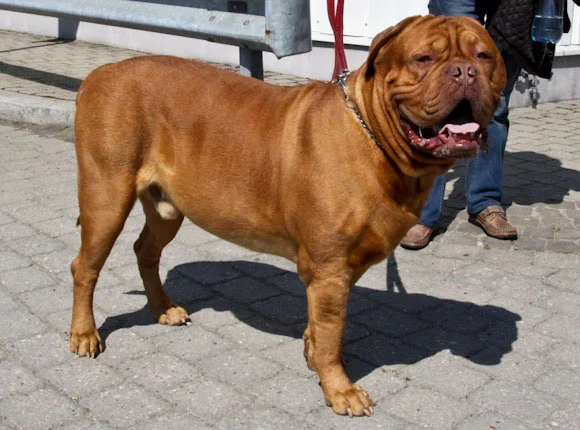
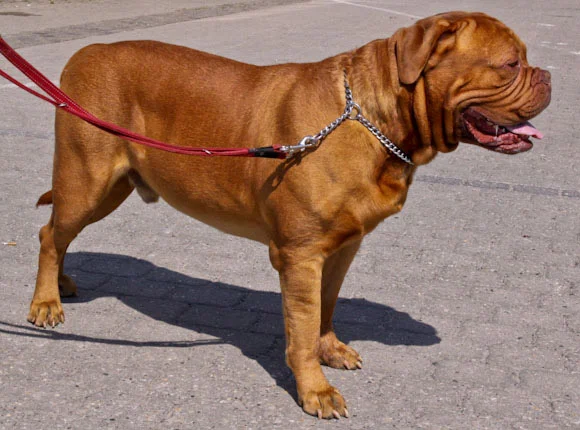
Dogue de Bordeaux
Other names: Mastim Françês, Bordeaux Mastiff, French Mastiff, Bordeauxdog
Watchdog, guarding, police work, carting, weight pulling.
- Origin
- France
- Size
- Large
- Height · Male
- 60–68 cm
- Height · Female
- 58–66 cm
- Weight · Male
- 50–58 kg
- Weight · Female
- 45–50 kg
- Litter
- 6–8 puppies
- FCI
- FCI group 2 · 2 · n.º 116
Traits
Activity
Social
At home
Care
Training
Guarding
Temperament
A very intimidating breed, this dog can also be calm and gentle given the proper home environment and socialization. This breed, if male, should not be placed in a home with another male. A powerful breed, the Dogue De Bordeaux does well with children but should always be supervised.
History
The dogue de Bordeaux is one of the most ancient French breeds, probably a descendant of the Alans and, in particular, the alan vautre of which Gaston Phebus (or Febus), Count of Foix, wrote in the 14th century, in his Livre de Chasse that ?he holds his bite stronger than three sighthounds?. The word ?dogue? appeared at the end of the 14th century.
In the middle of the 19th century these ancient dogues were hardly renowned outside the region of Aquitaine. They were used for hunting large game such as boar, for fighting (often codified), for the guarding of houses and cattle and in the service of butchers. In 1863 the first French dog show took place in Paris in the Jardin d?Acclimatation. The Dogues de Bordeaux were entered under their present name. There have been different types : The Toulouse type, the Paris type and the Bordeaux type, which is the origin of today?s Dogue.
Care
The Dogue De Bordeaux requires quite a bit of exercise, and would do best with a relatively active owner. A large yard is suggested when considering this breed and long walks would do great. However, the short muzzle can cause this breed to tire out quickly so proper water should always be available.
Training and socialization.
Health
An average shedder, this breed requires little to no maintenance. To remove excess hair, brushing with a firm bristle brush would be a good idea, however a wipe down with a dry towel or damp washcloth should be sufficient.
Training
The training must be made by an experienced person and it must be well ballanced, consequent, made with a calm, gentle voice. The dog should be praised and encouraged when the commands are rightexecuted. It gives a lot of devotion and affection and feels the necessity to get back the same affection from its master.
Coat & grooming
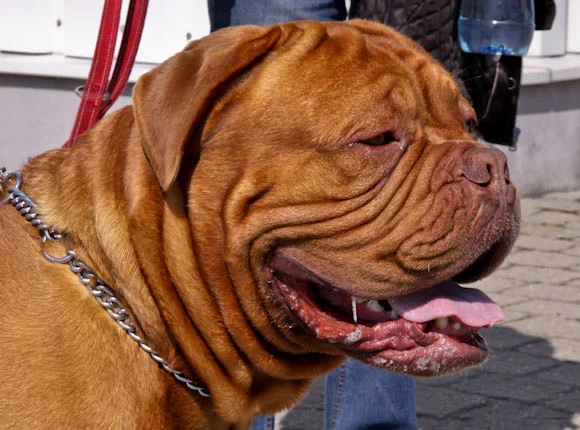
The fur of this dog needs a regular brush only during the moulting period. The wrinkles from the face must be cleaned regulary for not appearing infections. If it is warm, it has the tendincy of drooling. It musn't be kept under strong sun because it can make heatstroke.
Fun facts
The Dogue de Bordeaux is not an easy dog to breed. Litters are generally small. Caesarean sections are often needed at birth because of the puppies' extremely large heads. The dams are so broad chested that they lie down on their stomachs to nurse their p
Dogue de Bordeaux breeders
All breeders →No verified breeders for this breed yet. Are you a breeder? Register.
Looking for more breeders? Ask the Clube Português de Canicultura (CPC) for the list of registered breeders of your breed. Visit, meet the parents and ask for health tests.