Dogs
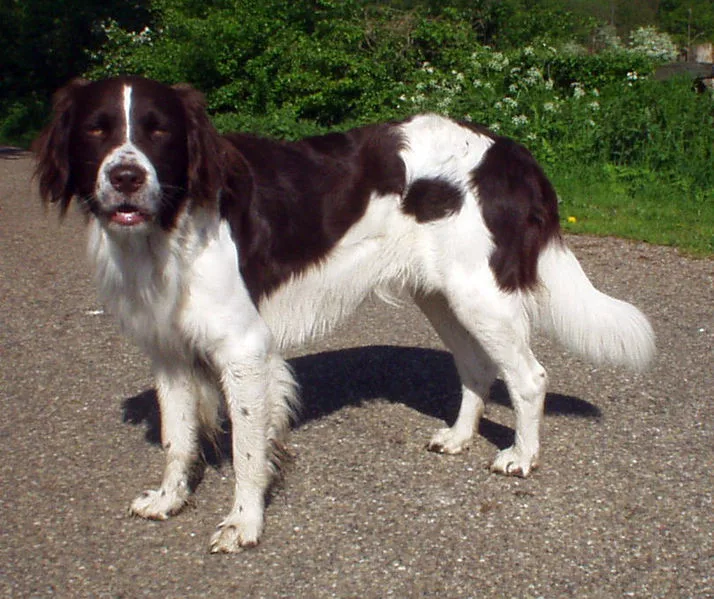
Drentsche Partridge dog
Other names: Drent, Dutch Partridge Dog, Drentse Partridge Dog, Drentse Patrijshond
- Origin
- Netherlands
- Size
- Large
- Height · Male
- 58–63 cm
- Height · Female
- 55–60 cm
- Weight · Male
- 20–23 kg
- Weight · Female
- 20–23 kg
- Life expectancy
- 12–13 years
- FCI
- FCI group 7 · 7 · n.º 224
Traits
Activity
Social
Training
Guarding
This text is only available in Portuguese for now.
Temperament
He is the ideal dog for hunting in varying fields. The dog hunts within range of the gun. Keeping in touch with the hunter is apparently an innate quality. A characteristic of many dogs of the breed is that when searching the game, the tail moves in a circular motion, especially when the dog picks up the scent of game. When approaching the game, the dog waits for the hunter to come near; when this takes a long time, he will look back for his master. He has the adaptability which makes him capable of hunting all sorts of game in the fields and in water. Besides he is a good retriever and finder of lost game. These characteristics are innate, therefore he needs little training. Because of his gentle character, it is wrong to use forceful training methods.
The dog is loyal and intelligent which makes him, together with a good upbringing and training, a highly esteemed family pet dog as well as a valuable companion of the hunter.
History
In the 16th century the breed originated from the Spioenen (also called Spanjoelen) which came via France from Spain. In the Netherlands they were called Partridge dogs. In the eastern part of the country, especially in the province Drenthe, these dogs were kept purebred and were not mixed with foreign breeds as done elsewhere. On the 15th of May 1943 the breed was officially recognised by the Raad van Beheer op Kynologisch Gebied in Nederland. This was strongly promoted by Baroness Van Hardenbroek, Mr. Van Heek Jr. and Mr. Quartero. The breed is related to a.o. the Small Münsterländer and the Epagneul Français. The 5th of June 1948 the breedclub was founded, the Nederlandse Vereniging « De Drentsche Patrijshond ».
Training
It is a dog easy to train, because it is submissive and learns quickly. The training must be consistent, gentle and varied.
Coat & grooming
The fur of this dog needs weekly brushing, made more frequently during the moulting period. The excessive hair should be removed between the pads of the paws and from ears.
Drentsche Partridge dog breeders
All breeders →No verified breeders for this breed yet. Are you a breeder? Register.
Looking for more breeders? Ask the Clube Português de Canicultura (CPC) for the list of registered breeders of your breed. Visit, meet the parents and ask for health tests.