


Dogs
English Setter
Other names: Lawerack, Laverack, Llewellin (or Llewellyn) Setter, English Setter
Hunting, tracking, retrieving, pointing, watchdog, agility.
- Size
- Large
- Height · Male
- 65–68 cm
- Height · Female
- 61–65 cm
- Weight · Male
- 25–30 kg
- Weight · Female
- 25–30 kg
- Life expectancy
- 10–14 years
- Litter
- 6–8 puppies
- FCI
- FCI group 7 · 7 · n.º 2
- AKC
- Non-Sporting Group · #94
Traits
Activity
Social
At home
Care
Training
Guarding
Temperament
Enthusiastic and mild mannered, English Setters do well in a family environment making a great child's companion. This breed loves to bark and makes a great watch or alert dog. They should not be trusted around smaller and more passive animals, however can do well with other more common animals such as the cat and the dog, given they have had the proper socialization. The English Setter is a very quick learner, however vies for human attention and requires much of it or they can become destructive and somewhat of a tyrant.
Care
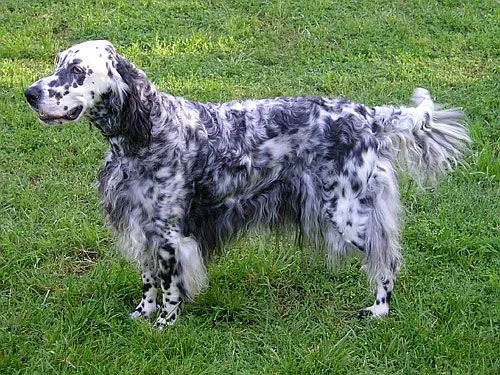
The English setter needs a lot of exercise every day, requiring at least an hour of hard exertion. He does best when he can live inside and play outside. The long coat needs regular brushing every two or three days. The white coat may be difficult to keep gleaming in some areas. Some clipping and trimming every month or two is advisable for optimal good looks.
The English Setter is fairly quiet indoors, however is very lively and energetic when allowed to roam off lead. Being that this breed was bred for running all day long, they have infinite energy and love to run which requires at least two hours of exercise daily. The English Setter should have at least a large fenced yard to have free roam and run. Burrs and/or sticks should be removed from the coat if any are present after such a session.
Health
The English Setter requires regular brushing if the coat is to stay in good shape. The feathering of the coat should be checked for burrs as they have the tendency to get stuck in the coat. The English Setter that is used for show should be groomed two three times a week with long brushing sessions and regular cleaning of the coat. Dry shampooing is often used so the natural oils are not removed from the beautiful and long coat. The coat of the show English Setter is commonly heavier and longer than that of the field Setter.
Training
The training of this dog must be firm, consequent, but done with a calm, gentle and affectionate voice.
Coat & grooming
The fut of this dog must be cut and trimmed for the aged hair and brushed between the timming sessions. The hair between the pads of the feet and from ears must be removed.
Fun facts
Beware of hip dysplasia. Buy only from OFA certified parents. Deafness is a concern; puppies should be BAER tested for hearing. Take care not to overfeed as this breed puts on weight easily. Can be difficult to housebreak. Likes to roam. A digger and good