Dogs
Entelbucher Cattle Dog
Other names: Entelbucher, Entelbucher Sennenhund, Entelbucher Cattle Dog, Bouvier de l´Entlebuch
Herding, agility, obedience, carting, search and rescue, tracking, weight pulling, tricks, watchdog.
- Origin
- Switzerland
- Size
- Medium
- Height · Male
- 44–50 cm
- Height · Female
- 42–48 cm
- Weight · Male
- 22–30 kg
- Weight · Female
- 22–30 kg
- Life expectancy
- 11–13 years
- Litter
- 3–6 puppies
- FCI
- FCI group 2 · 2 · n.º 47
Traits
Activity
Social
At home
Training
Guarding
Temperament
The Entlebucher Mountain Dog breed is not recommended for first time dog owners. They are friendly, loyal, and form close attachments to their family. They do not do well if bored or isolated and prefer to be with their family. The Entlebucher Mountain Dog does best in a home with older considerate children. They do well with other dogs and household pets. This breed is protective of family, home, and territory and will alert to danger or their suspicions by barking.
History
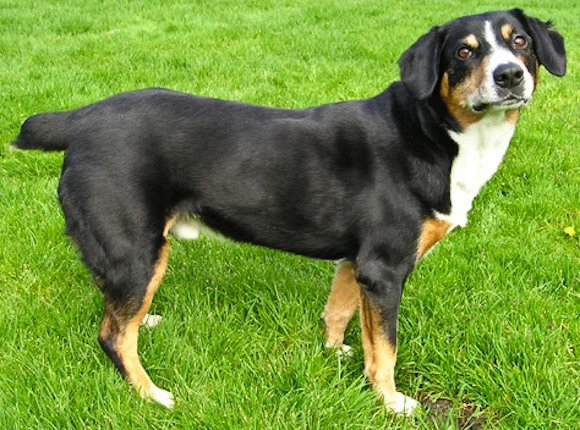
The ?Entlebucher? is the smallest of the four Swiss Mountain and Cattle Dogs. He originates from Entlebuch, a valley in the region of the Cantons Lucerne and Bern. The first description under the name ?Entlibucherhund? dates from the year 1889, but for a considerable time after that date, no difference was made between Appenzell and Entlebuch Cattle Dogs. In the year 1913 four examples of this small herding dog with congenital bobtail were exhibited at the dog show in Langenthal and presented to Prof.Dr.Albert Heim, the great patron of the Swiss Mountain and Cattle Dog breeds. On account of the judges reports, they were entered into the Swiss Canine Stud Book (SHSB) as the fourth Mountain and Cattle Dog breed. However, the first standard was only completed in 1927. After August 28th 1926, the date of the foundation of the Swiss Club of Entlebuch Cattle Dogs initiated by Dr. B. Kobler, this breed was promoted and continued as purebred. As the small number of entries into the SHSB (Swiss Stud Book) shows, the breed developed only slowly.
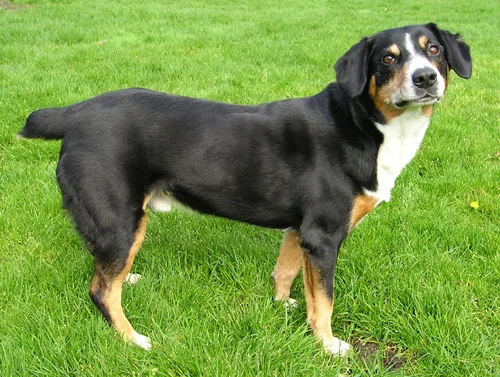
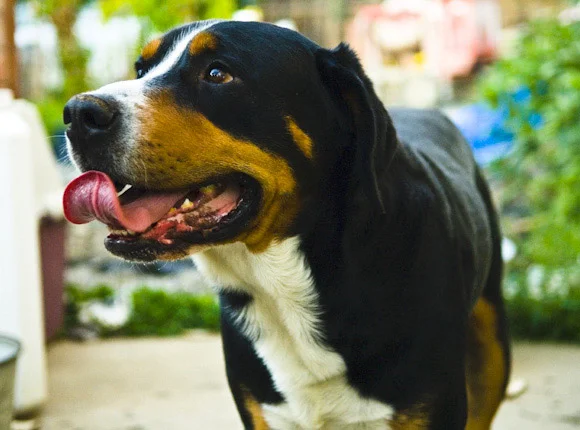
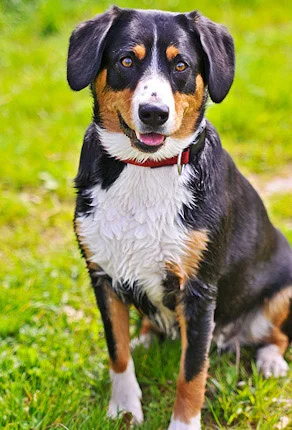
The Entlebuch Cattle Dog received renewed impetus when, apart from his hereditary qualities as a lively, tireless driving dog, his outstanding suitability as a utility and companion dog was proved. Today, still on a modest scale, this attractive tricoloured dog has found his admirers and enjoys increased popularity as a family dog.
Care
The Entlebucher Mountain Dog is not recommended for apartment living or sedentary owners. This breed requires an inordinate amount of physical exercise and mental stimulation. Entlebucher Mountain Dog's enjoy such family activities as jogging, walking, and frisbee. They do best with a large securely fenced yard or rural setting with a job to do.
Socialization and training.
Health
The Entlebucher Mountain Dog does not do well in warm climates. Occasional brushing with a firm bristle brush to remove loose and dead hair is recommended. Bathing should be done when necessary. It is important to not over-feed this breed, clip nails regularly, and provide dental hygiene. They are prone to such health issues as PRA, cataracts, and hip dysplasia.
Training
It is a dog easy to train because it is intelligent and it learns quickly. The training must be firm, consequent, well ballanced and loving. It needs to be socialized since an early age with other animals and other dogs. It likes always to have an activity including flyball or agility contests.
Coat & grooming
The fur needs an intense brushing with a special brush to remove the dead hair bristles during the moulting period. In the rest of the time an occasional brushing with an usual brush is enough.
Fun facts
The Entlebucher is prone to torn anterior cruciate ligaments, deep within the knee joint. Many are born with what has been recently identified as Entlebucher Urinary Syndrome, a condition which affects the anatomy of the urinary system. Most often dogs wi
Entelbucher Cattle Dog breeders
All breeders →No verified breeders for this breed yet. Are you a breeder? Register.
Looking for more breeders? Ask the Clube Português de Canicultura (CPC) for the list of registered breeders of your breed. Visit, meet the parents and ask for health tests.