Dogs
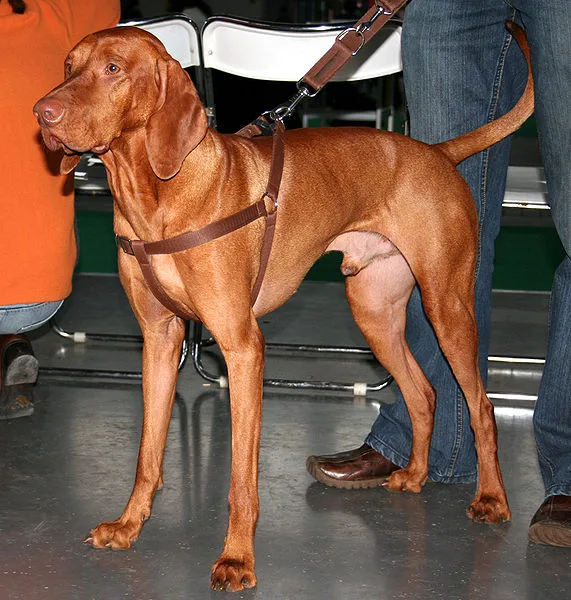
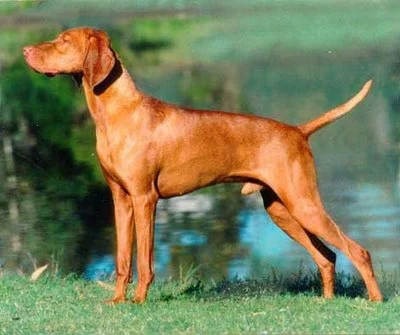
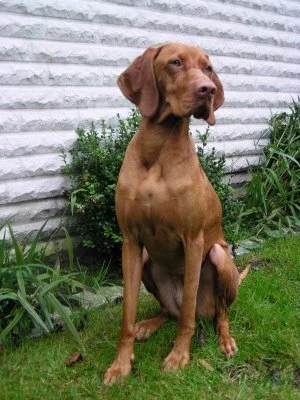
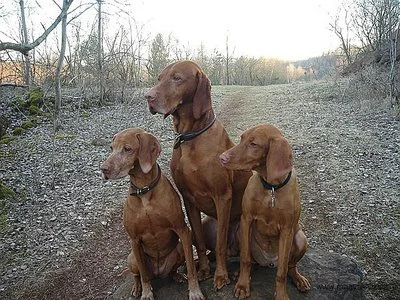
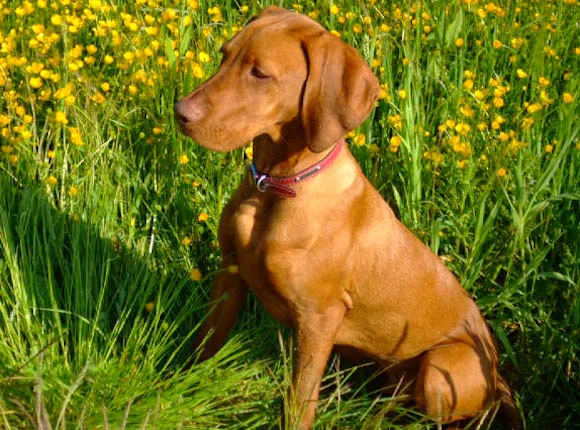
Hungarian Short-haired Pointing Dog Vizla
Other names: Hungarian Vizsla, Magyar Vizsla, Hungarian Pointer, Drotszoru Magyar Vizsla, Hungarian Pointer , Hungarian Short-haired Pointing Dog, Rovidszoru Magyar Vizsla, Rövidszörü Magyar Vizsla\r\n
hunting, companion
- Origin
- Hungary
- Size
- Large
- Height · Male
- 58–64 cm
- Height · Female
- 54–60 cm
- Weight · Male
- 20–30 kg
- Weight · Female
- 20–30 kg
- Life expectancy
- 10–14 years
- Litter
- 6–8 puppies
- FCI
- FCI group 7 · 7 · n.º 57
- AKC
- Non-Sporting Group · #45
Traits
Activity
Social
At home
Care
Training
Guarding
Temperament
The Vizsla is friendly, lively, and affectionate with their family and those they know. They are alert and watchful. They will bark when they sense danger or visitors. They are very reserved with strangers. The Vizsla is very demonstrative, but has a tendency to be willful and distracted. They get along well with older children and in most cases other dogs. They will tolerate cats they are raised with. The Vizsla loves to chew on anything and everything and is not a calm and placid breed. They will become destructive if they are allowed to be bored.
History
The ancestors of the Hungarian Vizsla came into the Carpathian Basin with the nomadic Hungarian tribes. Written descriptions and graphic illustrations are found in documents of the 14th century already. From the 18th century, his importance as a hunting dog has been increasing steadily.
As early as the end of the 19th century, competitions for pointing dogs were organised in Hungary, in which Hungarian Vizslas (among others) participated with great success.
In those days, other Gundog breeds most likely played an important part in the development of the breed.
The specific modern breeding started in 1920, as a result of which, the Short-Haired Hungarian Vizsla received recognition by the FCI in 1936.
Care
The vizsla needs a lot of strenuous exercise every day. This is an active breed that cannot be expected to meet his energy requirements with a short walk or within a small yard. He needs to be jogged or allowed to run in a large enclosed area. Otherwise, his needs are minimal. His coat requires little care except an occasional brushing to remove dead hair. He needs a soft bed.
The Vizsla is an extremely active breed that requires strenuous activity daily. They thrive in a large fenced area or a leashed jog with their owner. They also require mental stimulation, such as play sessions with their family to ensure their happiness. They are not recommended for apartment dwelling due to their enormous stamina.
Attention, exercise, a job or activity to do, and positive training.
Health
The Vizsla's coat requires very minimal care. They need to be brushed occasionally with a firm bristle brush and dry shampooed when necessary. Bathing should only be done with a mild soap so as not to strip the coat the protective oils. It is important to keep their nails trimmed. The Vizsla is generally healthy, but has a tendency toward hemophilia and hip dysplasia. They do not tolerate cold climates.
Training
This dog is relatively easy to train because it is willing to learn and wants to make pleasure to the master. The trainig must be gentle but consequent, well ballanced.
Coat & grooming
At the variety with short hair, the fur must be brushed oftener during the shedding period with a rubber brush to remove dead hair bristles. At the wiry-haired variety, the fur needs to be trimmed occasional by hand, when it is necessary. The hair increaseed in excess should be removed between the pas of the legs.
Hungarian Short-haired Pointing Dog Vizla breeders
All breeders →No verified breeders for this breed yet. Are you a breeder? Register.
Looking for more breeders? Ask the Clube Português de Canicultura (CPC) for the list of registered breeders of your breed. Visit, meet the parents and ask for health tests.