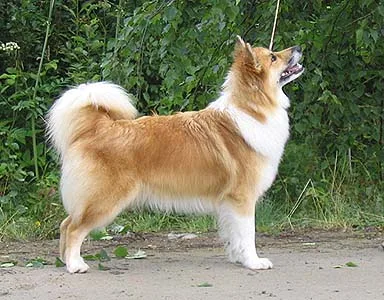
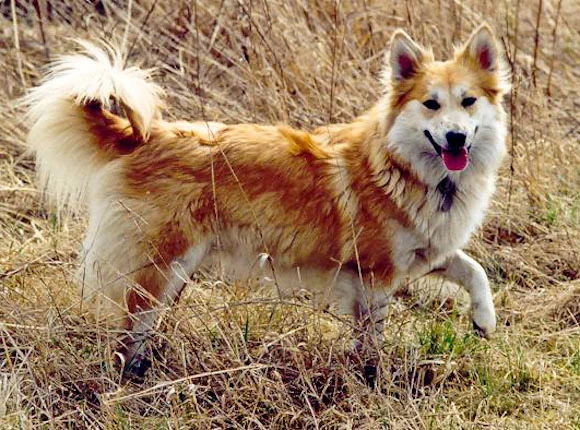
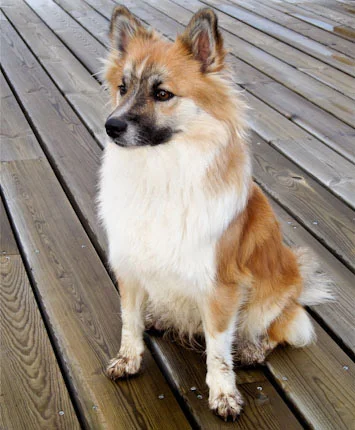
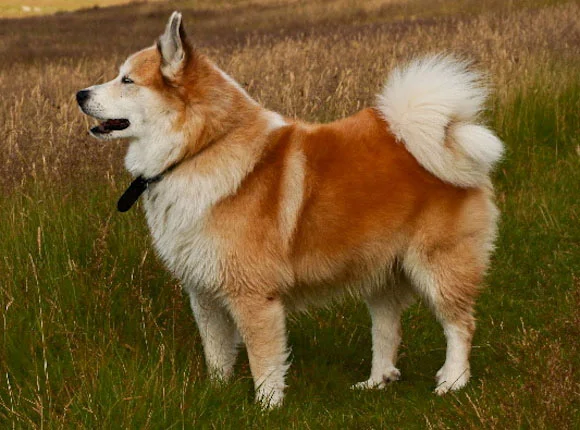
Dogs
Icelandic Sheepdog
Other names: Icelandic Shhepdog, Icelandic Spitz, Iceland Dog, Íslenskur fjárhundur, Islandsk Farehond, Friaar Dog, Canis islandicus (Latin)
Watchdog, tracking, herding, search & rescue, agility, obedience, performing tricks.
- Origin
- Iceland
- Size
- Medium
- Height · Male
- 44–48 cm
- Height · Female
- 40–44 cm
- Weight · Male
- 12–16 kg
- Weight · Female
- 10–14 kg
- Life expectancy
- 12–15 years
- Litter
- 3–6 puppies
- FCI
- FCI group 5 · 5 · n.º 289
Traits
Activity
Social
At home
Training
Guarding
Temperament
The Icelandic Sheepdog is a hardy and agile herding dog which barks, making it extremely useful for herding or driving livestock in the pastures, in the mountains or finding stray sheep. The Icelandic Sheepdog is by nature very alert and will always give visitors an enthusiastic welcome without being aggressive. Hunting instincts are not strong. The Icelandic Sheepdog is cheerful, friendly, inquisitive, playful and unafraid.
History
The Icelandic Sheepdog is Iceland?s only native dog. It was brought to Iceland with the first Viking settlers (AD 874 - 930). The Icelandic Sheepdog and its method of working adapted to the local terrain, farming methods and the hard struggle for survival of the Icelandic people over the centuries, making it indispensable in the rounding up of livestock on the farms. The Icelandic sheepdog?s popularity has increased over the last few decades and, despite the fact the breed is still very small in numbers, it is no longer considered to be in danger of extinction.
Care
The Iceland Sheepdog breed is not recommended for apartment living. They require an inordinate amount of exercise, activity, and family interaction. The Iceland Sheepdog requires a rural setting with room to roam and a job to do.
Exercise, grooming, a job to do, socialization and training.
Health
The Iceland Sheepdog requires occasional brushing as this will minimize loose and dead hair. Dew claw nails must be regularly trimmed. Bathing should only be done when absolutely necessary.
Training
It is a dog that is easy to train because it is intelligent and eager to learn. With a consequent, varied, firm (to overcome some tendincies of stubborness) and still gentle training, good results can be obtained. It can participate at agility and flyballcontests.
Coat & grooming
The fur of this dog must be brushed during the moulting period to remove the dead hair bristles.
Fun facts
One of the few downsides to owning an Icelandic Sheepdog is that they love to bark. For centuries, this breed has driven stock by barking instead of gathering them by staring at them like the Border Collie. Icelandic Sheepdogs also protected newborn lambs