Dogs
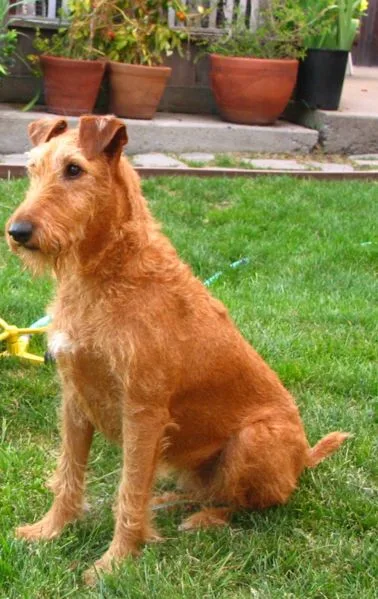
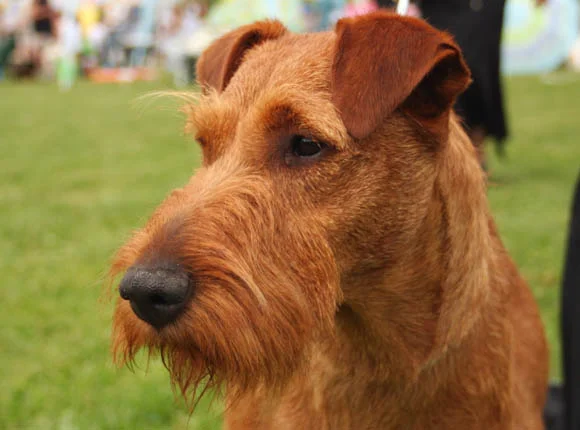
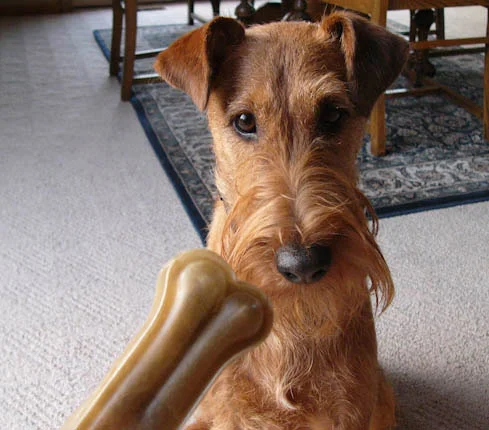
Irish Terrier
Other names: Irish Terrier, Irish Red Terrier, Daredevil, Terrier Irlandês, Terrier Preto Russo
Hunting, tracking, retrieving, watchdog, guarding, police work, military work.
- Origin
- Ireland
- Size
- Medium
- Height · Male
- 45–48 cm
- Height · Female
- 45–48 cm
- Weight · Male
- 10–13 kg
- Weight · Female
- 10–12 kg
- Life expectancy
- 13–15 years
- Litter
- 4–6 puppies
- FCI
- FCI group 3 · 3 · n.º 139
- AKC
- Terrier Group · #113
Traits
Activity
Social
At home
Care
Training
Guarding
Temperament
The Irish Terrier, while being game and capable of holding his own with other dogs, is remarkably loyal, good tempered and affectionate with mankind, but once he is attacked, he has the courage of a lion and will fight to the bitter end.
The dog?s reputation for getting into scraps with others, sometimes even in the showring, is undeserved. Though the terrier may be fierce when the circumstances call for it, the Irish Terrier is easily trained and a gentle pet, living up to his early description as ?the poor man?s sentinel, the farmer?s friend and the gentleman?s favourite?.
History
Ireland has produced four Terrier breeds, all of which are markedly different from terriers on the continent and in England. The dog now officially called Irish Terrier is possibly the oldest of the Irish terrier breeds but records are so scarce that it would be difficult to prove this conclusively. Before the 1880s the colour of the Irish Terrier had not been settled. Apart from red they were sometimes black and tan and sometimes brindle. At the end of the 19th century efforts were made to breed out the black and tan and the brindles so that by the 20th century all Irish Terriers showed the red coat. The red coated Irish Terrier soon made its appearance on show benches in England and in the United States where it was enthusiastically received. The Irish Terrier?s reputation was enhanced during the First World War when they were used as messenger dogs in the terrifying noise and confusion of trench warfare, thus proving both their intelligence and their fearlessness. The first breed club was set up in Dublin on March 31st 1879 and the Irish Terrier was the first member of the terrier group to be recognised by the English Kennel Club in the late 19th century as a native Irish Breed.
Care
This is a dog with an active mind and body. He needs daily entertainment and exercise. He makes a good walking and jogging companion, as well as hiking or hunting partner. His needs can also be met with a rigorous play session. His wire coat needs combing one or two times weekly, plus scissoring and shaping two to four times yearly.
This breed is highly active and needs regular exercise. They thrive on family play sessions, securely leashed walks, and romping and running in a safely enclosed space. The Irish Terrier does not do well if left alone indoors or outdoors for an extended period of time. Without adequate stimulation and attention they become lonely, bored, and will become destructive. The Irish Terrier will do okay in an apartment dwelling provided they are given sufficient exercise.
Fenced yard, grooming, leash, moderate exercise, training and socialization.
Health
The Irish Terrier requires regular brushing with a stiff bristle brush to minimize shedding and remove dead hair. Bathing should only be done when absolutely necessary using a mild shampoo to preserve the integrity of the coat. The Irish Terrier is a relatively healthy breed although some are prone to hypothyroid conditions.
Training
The training of this dog must be done by a person with experience in training, because it is stubbornsometimes and withmoodiness. The training must be diversified, consequent, tactful, firm, without being hard. It needs many activities, it likes lto run, to play with a ball.
Coat & grooming
This fur dog must be trimmed two or three times a year. Man must take off the excess hair increased between the feet pads.
Fun facts
The coat needs quite a bit of attention. Can be difficult to housebreak. This is a very healthy breed, prone to no major hereditary disorders. Likes to explore and chase things. Keep on leash except in a safe, enclosed space. Likes to dig.