Dogs
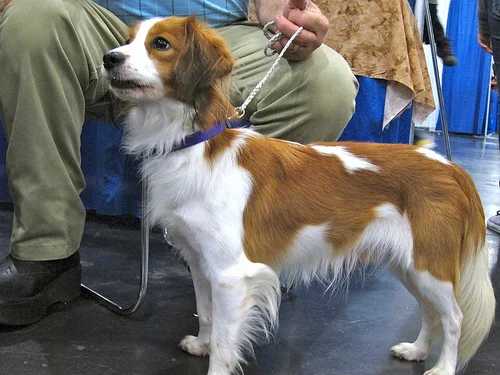
Kooikerhondje
Other names: Kooiker Hound, Small Dutch Waterfowl Dog, Dutch Decoy Dog, Kooiker Dog, Kooikerhondje\r\n
companion, duck decoy
- Origin
- Netherlands
- Size
- Small
- Height · Male
- 37–42 cm
- Height · Female
- 35–42 cm
- Weight · Male
- 10–11 kg
- Weight · Female
- 9–10 kg
- Life expectancy
- 12–13 years
- Litter
- 3–7 puppies
- FCI
- FCI group 8 · 8 · n.º 314
Traits
Activity
Social
At home
Training
Guarding
Temperament
Lively and agile, self-confident and with sufficient perseverance and stamina, good natured and alert, however not noisy. The breed is faithful, easy-going and friendly.
Outside the hunting season the dog is expected to find and kill vermin, hence he needs to be keen, swift and tough. He is a true sporting dog, being attentive and energetic and having a zest for working and with a cheerful character.
History
In 1942, during the Second World War, the Baroness Van Hardenbroek van Ammerstol began to recreate the Kooikerhondje. She gave a picture of the type of dog she was looking for to a pedlar and asked him to look out for such dogs. At a farm in the province of Friesland he found the bitch now well known as Tommy. She became the founding bitch of the Kooikerhondje. In 1966 the Raad van Beheer adopted the interim breed and in 1971 the breed was officially recognized.
The Kooikerhondje was and still is used in the duck decoys. His task is still to lure the ducks into the decoy with his gaily waving tail; he does not hunt the ducks. He calmly moves between the decoy-screens in order to provoke the ducks curiosity and lure them further down the decoy pipe where the ducks are captured in a trap. They are either killed for the table or ringed for ornithological research.
Care
The Kooikerhondje breed is not recommended for apartment or city dwelling. They thrive on physical activity and do best in a rural setting with ample opportunity to run, roam, and hunt.
Positive training, socialization, exercise and supervision with children.
Health
Kooikerhondje's require occasional brushing. Bathing should only be done when absolutely necessary. It is important to regularly check and clean the ears. They are prone to such health issues as Epilepsy, Von Willebrand Disease, Eye Disorders, Patella Luxation, and Myelopathy.
Training
It is an intelligent dog, eager to make pleasure to its master, sensitive to the intonation of the voice and so the training is not difficult to made. However, the training must be pretty firm, well-balanced, consistent without being harsh, cruel but rather gentle, affectionate. It needs socialization and training.
Coat & grooming
The fur needs regularly brushing for keping its neat look. If it is necessary, the hair grown in excess between the pads of the paws or from ears must be cut, to keep them clean.
Kooikerhondje breeders
All breeders →No verified breeders for this breed yet. Are you a breeder? Register.
Looking for more breeders? Ask the Clube Português de Canicultura (CPC) for the list of registered breeders of your breed. Visit, meet the parents and ask for health tests.