Dogs
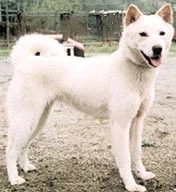
Korea Jindo
Other names: Chindo, Jindo, Jindo Gae, JindoGae, Jin dog, Korea Jindo Dog
- Origin
- South Korea
- Size
- Medium
- Height · Male
- 50–55 cm
- Height · Female
- 45–50 cm
- Weight · Male
- 18–23 kg
- Weight · Female
- 15–19 kg
- Life expectancy
- 12–15 years
- FCI
- FCI group 5 · 5 · n.º 334
Traits
Social
Temperament
The Korea Jindo Dog has a very strong instinct for hunting and is bold, brave, alert and careful, not tempted easily and impetuous. But most of all he is extremely faithful to his master. On the whole he is not fond of other animals, especially males. He also has a good sense of direction.
A one-man dog, he readily accepts a new master, but never forgets his attachment towards the former master who raised him from puppyhood. He keeps himself clean and eats sparingly.
History
There is no written record about the origin of the Korea Jindo Dog, but many authorities agree that this breed has existed for several thousands of years in the Island of Jindo, which is located at the South-West end of the Korean peninsula. About the ancient origin, however, among different theories, the main accepted is, that the Jindo Dog is indigenous to Korea; the breed has been well preserved in this island due to the transportation difficulties in those days. In Korea, Korea Jindo Dogs are called Jindo-kae or Jindo-kyon. Kae or Kyon are Korean words for dog.
Care
The Jindo is not recommended for apartment dwelling. They require a highly secured fenced yard to release their energy. This breed thrives on playing with family, but tug-of-war play is highly cautioned against. The Jindo will benefit from daily walks provided they are securely leashed and muzzled if in a public setting.
Health
The Jindo breed requires regular brushing of the coat as it will minimize loose hair. During the heavy, twice a year shedding season, daily brushing is an absolute must. Frequent warm baths during this time help with the shedding process. The Jindo has no health issues due to limited intervention of human breeding.
Korea Jindo breeders
All breeders →No verified breeders for this breed yet. Are you a breeder? Register.
Looking for more breeders? Ask the Clube Português de Canicultura (CPC) for the list of registered breeders of your breed. Visit, meet the parents and ask for health tests.