Dogs
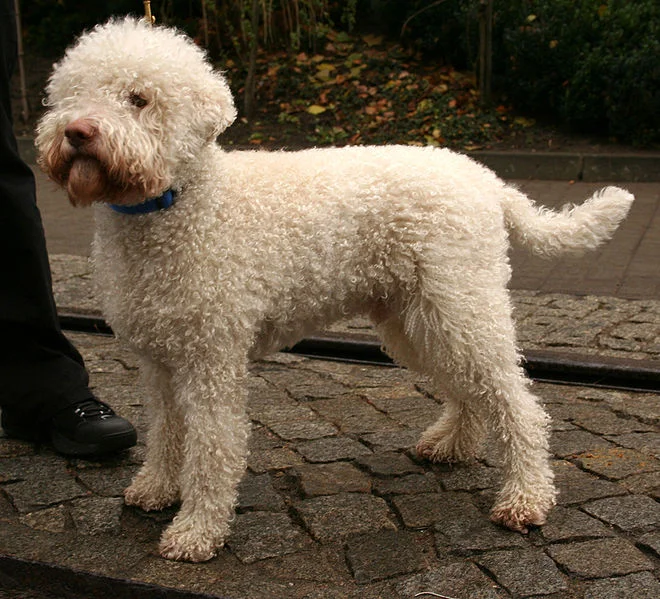
Lagotto Romagnolo
Other names: Water Dog of Romagnolo, Romagna Water Dog
Hunting, Companion
- Origin
- Italy
- Size
- Medium
- Height · Male
- 43–48 cm
- Height · Female
- 41–46 cm
- Weight · Male
- 13–16 kg
- Weight · Female
- 11–14 kg
- Life expectancy
- 11–16 years
- Litter
- 4–6 puppies
- FCI
- FCI group 8 · 8 · n.º 298
Traits
Activity
Social
Training
Temperament
A natural gift for searching and its very good nose has made the breed very efficient in truffle searching.
The former hunting instinct has been modified by genetic selection; eliminated; hence his work is not distracted by the scent of game. The Lagotto is tractable, undemanding, keen affectionate, very attached to his owner and easy to train. He is also a very good companion and an excellent watch-dog.
History
Ancient breed of retrieving water dogs in the lowlands of Comacchio and marshlands of Ravenna. During the centuries, the great marshlands were drained and turned into arable land. Subsequently the Lagotto changed from being a water dog to an excellent dog for searching truffles in the flat open country and in the hills of Romagna.
Care
The Lagotto Romagnolo is not recommended for apartment living or sedentary owners. They require an inordinate amount of exercise and mental stimulation. This breed does best with a job to do in a rural setting. If they become lonely or bored they will become destructive. They love to dig, so landscaping must be protected. They excel in tracking, agility, and obedience.
Grooming, moderate socialization, and a fenced yard with instructions not to dig.
Health
The Lagotto Romagnolo requires daily combing of the coat to prevent matting. Professional clipping of the coat should be done twice a year. Bathing should be done when necessary. They have a low incidence of hip dysplasia and cerebral anomaly.
Lagotto Romagnolo breeders
All breeders →No verified breeders for this breed yet. Are you a breeder? Register.
Looking for more breeders? Ask the Clube Português de Canicultura (CPC) for the list of registered breeders of your breed. Visit, meet the parents and ask for health tests.