Dogs
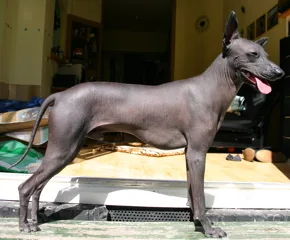
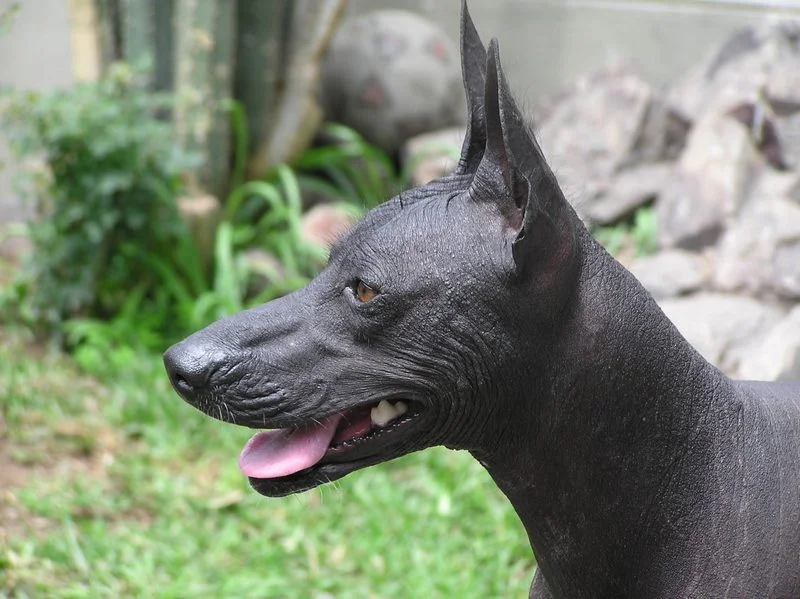
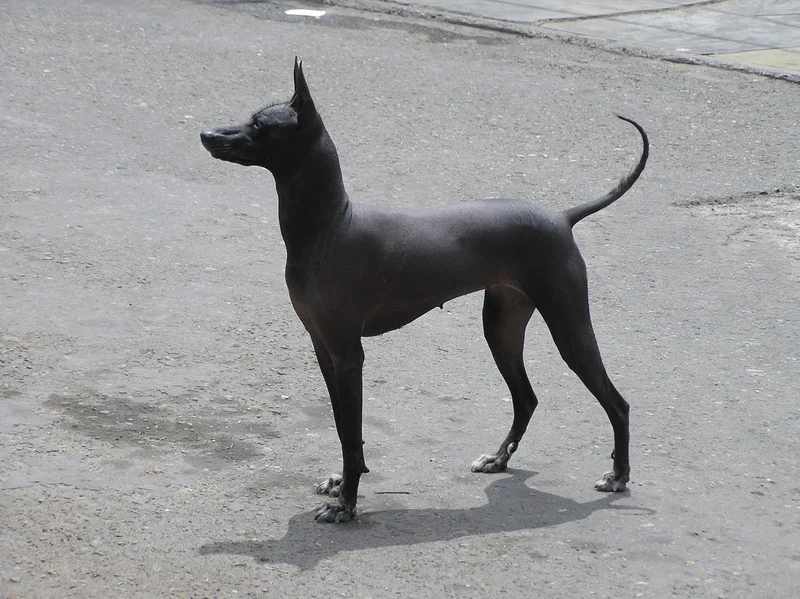
Large Peruvian Hairless Dog
Other names: Perro sin Pelo del Peru, Moonflower Dog, Perro Flora, Chien nu du Pérou, Peruanischer Nackthund, Peruvian Hairless Dog, Perunkarvatonkoira, Peruu Inca Orhideekoer, Inkade Orhideekoer, Viringo and Peruaanse Haarloze Hond
Lure coursing, hunting, sighting, agility, obedience, watchdog, guarding, tricks.
- Origin
- Peru
- Size
- Large
- Height · Male
- 50–65 cm
- Height · Female
- 50–65 cm
- Weight · Male
- 12–25 kg
- Weight · Female
- 12–25 kg
- Life expectancy
- 11–12 years
- Litter
- 2–4 puppies
- FCI
- FCI group 5 · 5 · n.º 310
Traits
Social
At home
Training
Temperament
The Peruvian Inca Orchid breed is not recommended for first time dog owners. They do best in a home with older considerate children and get along well with other dogs. They are not recommended for homes with non-canine pets. The Peruvian Inca Orchid are highly devoted, affectionate, and loving. This breed is extremely sensitive and fragile. They do not do well in the sun or in cold climates. Peruvian Inca Orchid's are very soft-tempered, but are reserved, distrustful, and wary of strangers. They are highly intelligent, obedient, fastidious, and willing to please. The Peruvian Inca Orchid is supple, lithe, agile, and quick.
History
According to certain experts, this dog was introduced in Peru during the Chinese immigration, soon after the promulgation of the law abolishing the slavery of the blacks by the president of Peru, Don Ramón Castilla. On the other hand, other searchers suppose that this dog comes from the African continent through the intermediary of nomads who arrived in America accompanied by their hairless dogs. Another possible explanation is that the presence of this dog would be due to the migration of men and their dogs from Asia to America through the Bering Strait.
However, next to all these suppositions, there are certain proofs such as the representations which appear on ceramics of different pre-Inca civilisations (Vicus, Mochica, Chancay, Chancay, under Tiahuanacoid influence, Chimu); in many cases the hairless dog has replaced the Puma, the snake or the falcon, this in particular and in a more evident way in the Chancay culture. As we can gather from the reproductions, the hairless dog appears during the pre-Inca archeological periods, i.e. between the years 300 BC and the years 1400 AC.
Noble and affectionate at home with those close to him, at the same time lively and alert; he is wary and a good guard in presence of strangers.
Care
The Peruvian Inca Orchid breed is well suited for apartment living. Yards must be securely fenced with ample shade. They do not require an inordinate amount of exercise and a securely leashed daily walk will suffice. They thrive on spending time with their family and do best being kept indoors as much as possible.
Protection from the sun and cold, skin care, and socialization.
Health
The Peruvian Inca Orchid breed is prone to early tooth loss. The skin of the Hairless variety must be kept protected at all times. It is important to not "overly-lotion" the skin as this makes the skin more prone to tearing, clogged pores, and acne. Special attention must be given to the ears to prevent dryiness and cracking. The Coated variety should be brushed when necessary. Bathing of both varieties should be done only when required using a mild shampoo.
Fun facts
The skin on hairless dogs (and coated dogs with thin coats) needs to be bathed often, protected with sunscreen, and lubricated with a lotion or cream. The edges of the ears also need to be lubricated regularly to keep them from cracking. (The coated dogs