Dogs
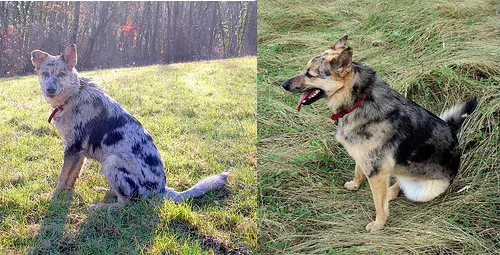
Long-haired German Shepherd
Search & rescue, guide for blind, working, herding, scent, companion
- Origin
- Germany
- Size
- Large
- Height · Male
- 60–65 cm
- Height · Female
- 55–60 cm
- Weight · Male
- 30–40 kg
- Weight · Female
- 22–32 kg
- Life expectancy
- 10–12 years
- Litter
- 5–10 puppies
- FCI
- FCI group 1 · 1 · n.º 166
- AKC
- Herding Group · #4
Traits
Activity
Social
At home
Care
Training
Guarding
Temperament
The German Shepherd Dog must be well-balanced (with strong nerves) in terms of character, self-assured, absolutely natural and (except for a stimulated situation) good-natured as well as attentive and willing to please. He must possess instinctive behaviour, resilience and self-assurance in order to be suitable as a companion, guard, protection, service and herding dog.
History
According to the official documentation of the Verein für Deutsche Schäferhunde (SV) e.V. (Society for the German Shepherd Dog, ?SV? for short) ? legal domicile in Augsburg, Germany, member of the Verband für das Deutsche Hundewesen (VDH, German Kennel Club) ? the "SV" as the founding club of the breed is responsible for the breed standard of the German Shepherd Dog. Established in the first General Meeting at Frankfurt/Main on 20 September 1899 according to suggestions by A. Meyer and Max von Stephanitz and in addition to the amendments of the 6th General Meeting on 28 July 1901, the 23rd General Meeting at Cologne/Rhineland on 17 September 1909, the Executive Board & Advisory Board Meeting at Wiesbaden on 5 September 1930 and the Breeding Committee & Executive Board Meeting on 25 March 1961, revisions were resolved within the framework of the World Union of German Shepherd Dog Clubs (WUSV) Meeting on 30 August 1976.
Revisions and catalogued measures were resolved with the Enabling Resolution through the Executive Board and Advisory Board from 23/24 March 1991, amended through the Federal Conventions from 25 May 1997 and 31 May/1 June 2008.
The German Shepherd Dog, whose methodical breeding was started in 1899 after the foundation of the society, had been bred from the central German and southern German breeds of the herding dogs existing at that time with the ultimate objective of creating a working dog inclined to high achievements. In order to achieve this objective, the breed standard of the German Shepherd Dog was determined, which relates to the physical constitution as well as the traits and characteristics.
Care
This breed needs daily mental and physical challenges. He enjoys a good exercise session as well as learning session. He is family-oriented and does well as a house dog. His coat needs brushing one or two times weekly.
This breed is happiest when given a job to do. They require strenuous exercise and enjoy securely leashed walks, family play sessions, and a large safely fenced area to romp and run freely in. The German Shepherd will do okay in an apartment or condominium dwelling provided they are given sufficient exercise, stimulation, and attention.
Exercise, socialization and training.
Health
This breed requires daily brushing to minimize loose hair. Bathing should only be done when absolutely necessary using a mild shampoo to preserve the integrity of the coat. German Shepherds are prone to such health issues as blood disorders, elbow and hip dysplasia, epilepsy, flea allergies, digestive problems, and chronic eczema.
Coat & grooming
It needs relatively little care, the brushing being made especially during the moulting periods with a special brush for removing the dead hair bristles.