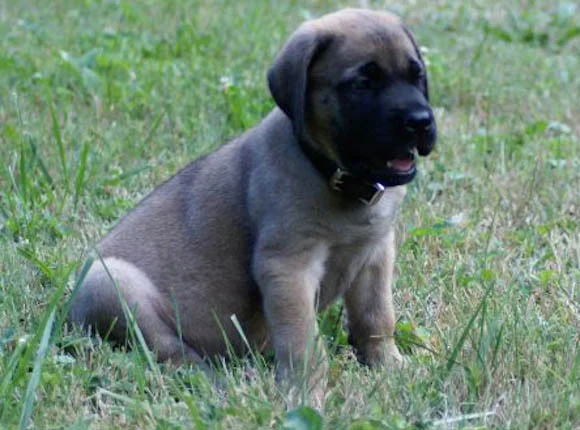
Dogs
Mastiff
Other names: Mastiff, Old English Mastiff, English mastiff
hunting, companion, watchdog, guard dog
- Size
- Giant
- Height · Male
- 70–76 cm
- Height · Female
- 70–76 cm
- Weight · Male
- 75–86 kg
- Weight · Female
- 75–86 kg
- Life expectancy
- 8–10 years
- Litter
- 2–5 puppies
- FCI
- FCI group 2 · 2 · n.º 264
- AKC
- Working Group · #33
Traits
Activity
Social
At home
Care
Training
Guarding
Temperament
A combination of grandeur and courage. Calm, affectionate to owners, but capable of guarding. Usually indifferent with strangers; timidity is unacceptable.
History
The Mastiff, perhaps not in exactly the form as we know it today, has been with us for many hundreds of years, and played its part in history since well before the Battle of Agincourt, in the early fifteenth century. Even then the Mastiff was known for his courage and guarding instincts. It is recorded that when the Romans invaded Britain they found a mastiff type dog already here, and were so impressed that they took some back to fight in the arenas of Rome. When the Normans came to Britain the mastiff type was so common that the French word dogue found its way into the English language.
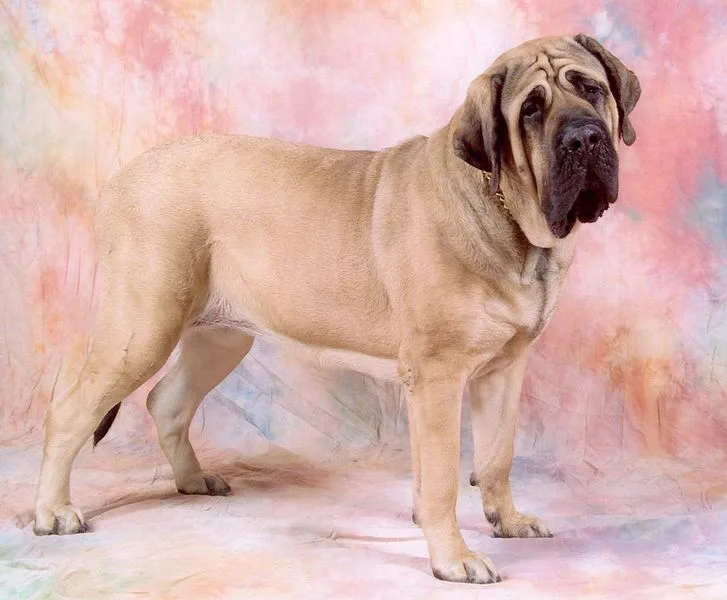
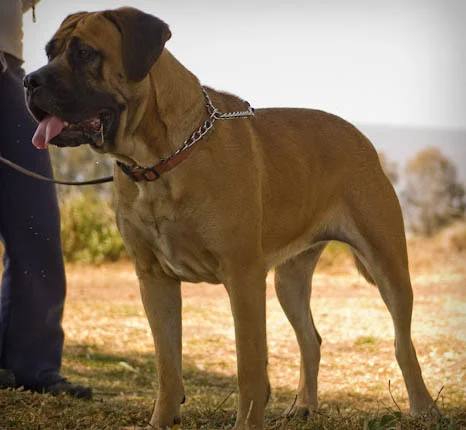
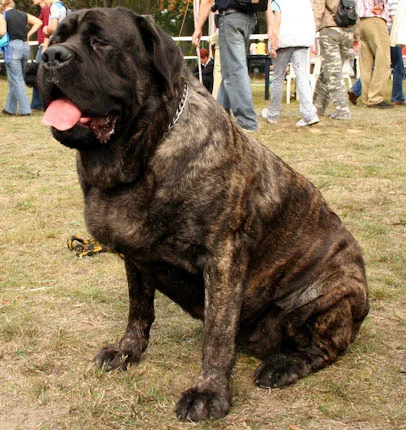
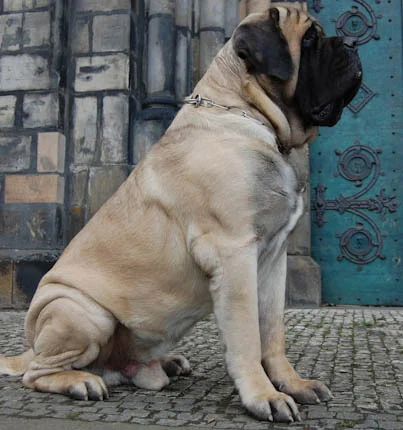
The breed almost became extinct in Britain after the Second World War. Stock was then imported, and since that time the numerical strength and quality of the breed have taken an upsurge. Combining grandeur with good nature, he is an extremely large dog in both height and girth, broad and deep in body, full of substance, with large strong bones.
Care
The adult mastiff needs daily moderate exercise, consisting of either a good walk or game. He does not enjoy hot weather; in fact he is a breed that should live inside with his family so that he will be inclined to fulfill his role of devoted guardian. He tends to drool. Coat care is minimal.
The Mastiff is slow moving and is inclined to be rather lazy. Daily securely leashed walks or a play session in a safely fenced small yard are highly recommended to keep them happy and fit. They will do okay in an apartment or condominium dwelling provided they are given stimulation, attention, and sufficient exercise.
Attention, financial ability to provide giant sized needs, and socialization.
Health
The Mastiff requires minimal grooming. Occasional brushing with a firm bristle brush will suffice. Bathing or dry shampooing should be done when necessary. The Mastiff is prone to hip and elbow dysplasia, bloat, ectropion, PRA, cardiomyopathy, and gastric torsion. They also have a tendency to drool and snore.
Training
The training of this dog must be made with patience, consistency, the dog must gladly attend these sessions. During the growth period, the dog must not be strained too much, to avoid the disorders of the bones, knukles and muscles growth.
Coat & grooming
The casual brushing, and more often during the moulting period is enough for taking care of the fur of this dog. Any time it needs, its wrinkles from the face will be cleaned with a special lotion for not getting infected. They must not taken out for a walk when when temperatures are high. The Masstiff has a very big appetite and can became obese very easy if it is not properly fed.
Fun facts
Beware of hip and elbow dysplasia; buy only from OFA stock. The Mastiff can be subject to cystinuria (a kidney disease), eye problems, cancer, and epilepsy. Tends to drool, wheeze, and snore (loudly). Do not overfeed. Essential to socialize thoroughly as