Dogs
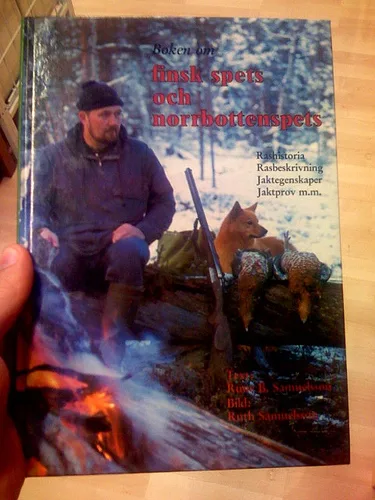
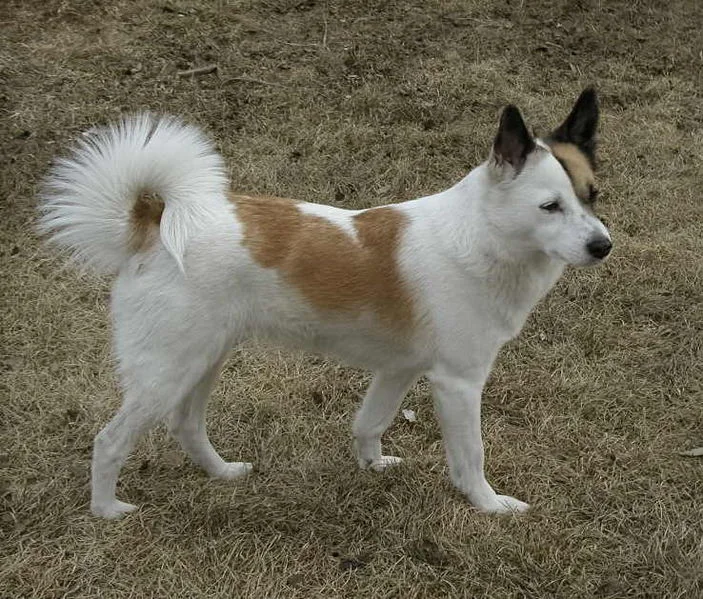
Norrbottenspets
Other names: Norrbottenspitz, Pohjanpystykorva, Norrbottenspitz, Norbotten Spitz , Nordic Spitz
- Origin
- Sweden
- Size
- Medium
- Height · Male
- 42–47 cm
- Height · Female
- 40–44 cm
- Weight · Male
- 13–15 kg
- Weight · Female
- 11–14 kg
- Life expectancy
- 14–17 years
- FCI
- FCI group 5 · 5 · n.º 276
Traits
Activity
Social
Training
Guarding
This text is only available in Portuguese for now.
Temperament
In its capacity as hunting dog the breed should be attentive and bold. It is a keen, lively, self confident dog with a kind disposition.
Although the breed is mainly used for hunting large forest grouse (caper-caillie and black grouse) it is still capable of hunting fur game as well as baying elk.
History
The Norrbottenspitz (Spitz from the county of North Bothnia) probably originates from small Laika type spitz that were known to live with hunting people in the North Cape area already in prehistoric time. Small hunting spitz have survived for thousands of years through natural selection - the survival of the fittest. In the very harsh areas of the northern parts of the Scandinavian Peninsula, hunting for food and fur was a necessity for survival. Precious furs like sable, marten-skin and ermine were the only valid currency for centuries. When fur prices dropped drastically after World War II, so did the interest for the Norrbottenspitz. The breed vanished and had no registrations for many years; hence the Swedish Kennel Club (SKK) declared it extinct. But only a decade later news came that some true to type specimens had been found living as pets and watch dogs on small homesteads in the inland North Bothnia. Due to the very dedicated work of a few men, this old type hunting spitz was saved. In 1967 the Norrbottenspitz was re-introduced to the Registry and a new standard was drawn up.
Training
Just like the other nordic dogs, this breed is also quite difficult to train because it is independent and has a mind of its own. The training must be done by a skilled, patient, determined, persuasive person in order to reach an acceptable level of effectiveness.
Coat & grooming
An occasional brushing, eventually more often in the moulting periods, is enough.