Dogs
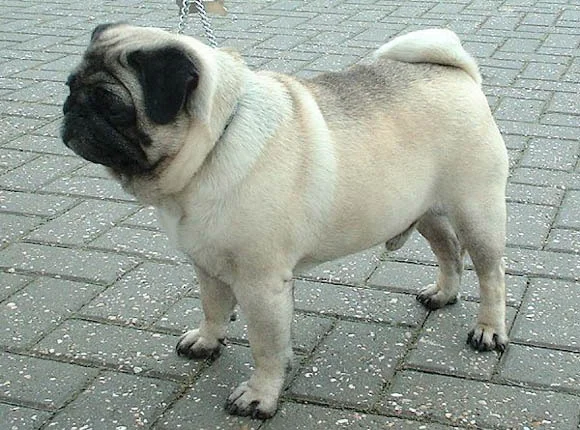
Pug
Other names: Chinese pug, Dutch bulldog, Dutch mastiff, Mini mastiff, Mops, Carlin, Mopshond, Lo-Sze\r\n
Watchdog ,performing tricks.
- Origin
- China
- Size
- Toy
- Height · Male
- 24–28 cm
- Height · Female
- 24–28 cm
- Weight · Male
- 6–8 kg
- Weight · Female
- 6–8 kg
- Life expectancy
- 12–15 years
- FCI
- FCI group 9 · 9 · n.º 253
- AKC
- Toy Group · #12
Traits
Activity
Social
At home
Care
Training
Guarding
Temperament
Great charm, dignity and intelligence. Even-tempered, happy and lively disposition.
History
A certain amount of speculation has taken place regarding the origin of this breed, which would seem to have come from the Orient. His home country is listed as China, where snub-nosed dogs have always been in favour. He found his way to Europe with traders of the Dutch East India Company and as far back as the 1500s was being admired in the Netherlands. In fact, the Pug became the symbol for the royal patriots.
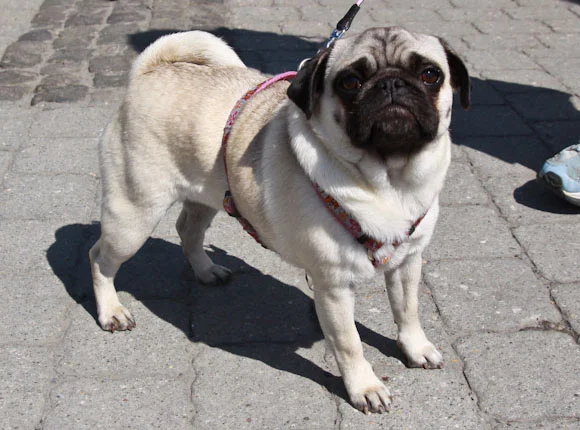
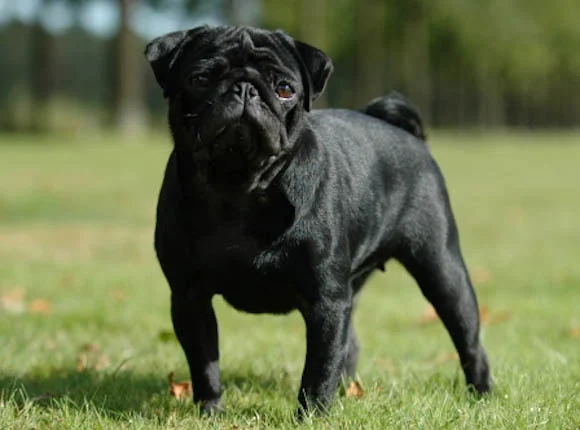
The Pug arrived in England when William III came to the throne. Until 1877 the breed was seen here only in fawn but in that year a black pair was introduced from the Orient.
Care
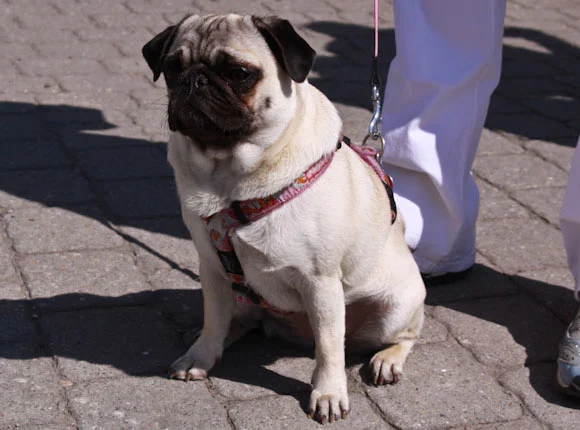
The pug needs daily exercise, either in the form of a lively game or a moderate walk on leash. He does not do well in heat and humidity and should not be kept outdoors. He needs minimal coat care but daily cleaning of facial wrinkles. His smooth coat needs only occasional brushing to remove dead hairs; however, the wrinkles need regular cleaning and drying to prevent skin infections. The pug wheezes and snores.
Pugs are lively little dogs, however they are relatively active indoors and do well without a yard. This breed does love long walks, but proper water should always be provided as this breed is prone to breathing problems and tires quickly. This breed is excellent for an apartment environment. The Pug adapts well to many different environments, and will take as much exercise as provided. However, he has the tendency to overeat and become lazy, so exercise must be provided on a regular basis.
Health
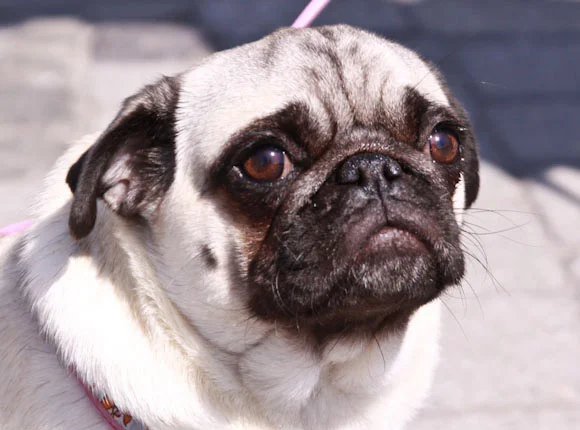
Grooming wise, the Pug does not require much maintenance. The muzzle area should be cleaned as this breed has the tendency to drool. Under the folds of skin should also be cleaned to avoid any dry or itchy skin. Bathing should only be performed when necessary, as it will remove the natural oils from the skin and coat.
Training
This dog is intelligent and sensitive at the tone of voice and that's why with a gentle, friendly, but consequent training the wanted results can be achived.
Coat & grooming
The fur of this dog must be brushed ocassionaly with a rubber brush. The facewrinklesmust be kept always clean for not getting infected. It must be protected from strong sunrays. It has the tendincy to snore.
Fun facts
Don't overfeed this little dog, as he tends to put on too much weight. Like many short-nosed breeds, the Pug is prone to respiratory trouble, and should not be over-exercised, especially in warm weather. After bathing, dry him quickly and thoroughly to pr