Dogs
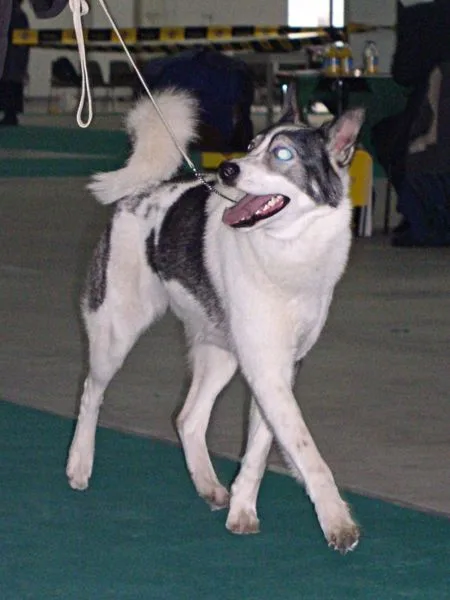
Russian-European Laika
Other names: Russian-European Laika, Russko-Evropeïskaïa Laïka, Russisch-Europäischer Laïka
- Origin
- Russia
- Size
- Large
- Height · Male
- 57–64 cm
- Height · Female
- 53–60 cm
- Weight · Male
- 20–25 kg
- Weight · Female
- 18–22 kg
- Life expectancy
- 10–12 years
- FCI
- FCI group 5 · 5 · n.º 305
Traits
Social
This text is only available in Portuguese for now.
Temperament
Steady, balanced temperament. A vigorous dog with a very well developed sense of scent and detection of game and a pronounced passion for hunting, especially larger prey. Very independent when hunting. Friendly, kind and trustful towards people.
History
This native Russian hunting breed is one of the principle hunting dogs of the Taiga region as well as mountain areas in Central and East Siberia. The breed evolved from off-spring of Tungus, Yakut, pre-Baikal and pre-Amur Laikas. The first description of the pre-Amur Laika, which later become the basis of the breed standard, dates from the beginning of the 20th century. In 1947 East-Siberian Laika achieved breed status. In 1949 the provisional standard was published and in 1981 the final standard for was approved.
Nowadays the East-Siberian Laika is widespread in its native/original areas. Foundation stock from kennels with dogs well established in type and ability to work has been introduced to the Irkutsk region of the Russian Federation.
There is a vast population of the breed in the European part of Russia, especially in the Leningrad, Smolensk, and Tver regions and part of the Moscow region. The East-Siberian Laika is also appreciated in Scandinavia.