
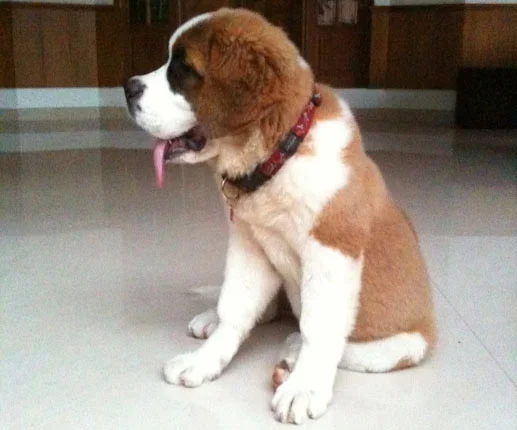
Dogs
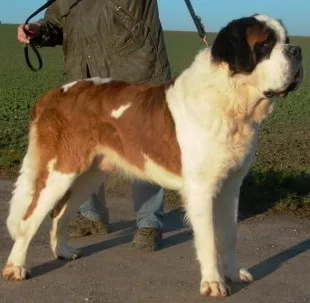
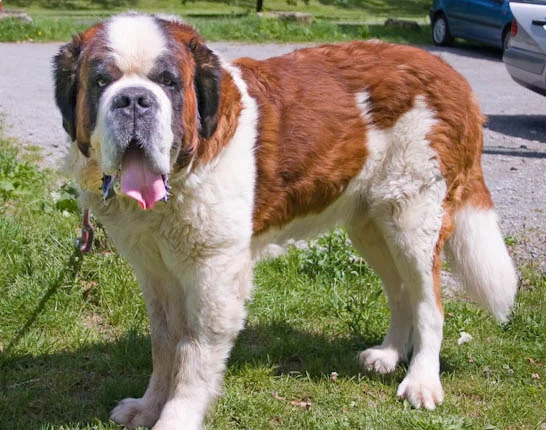
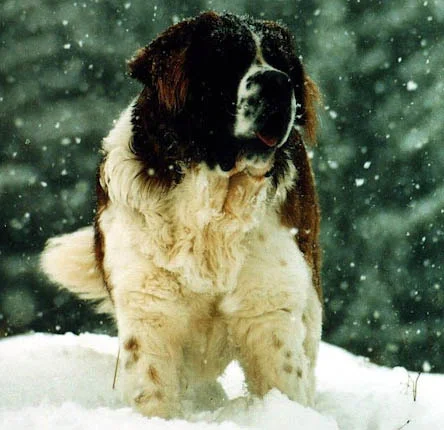
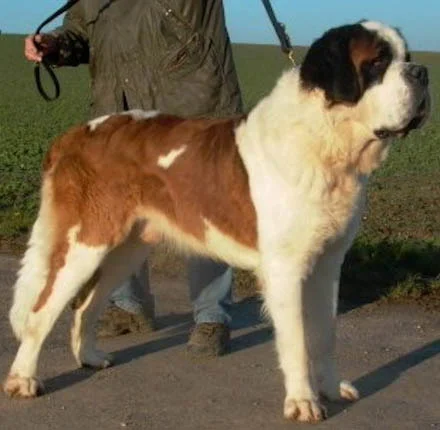
Saint Bernard (Short-haired)
Other names: St. Bernhardshund, Bernhardiner, Alpine Mastiff , Saint Bernard
Watchdog, search & rescue, carting.
- Origin
- Switzerland
- Size
- Giant
- Height · Male
- 70–90 cm
- Height · Female
- 65–80 cm
- Weight · Male
- 55–91 kg
- Weight · Female
- 55–81 kg
- Life expectancy
- 8–10 years
- Litter
- 6–8 puppies
- FCI
- FCI group 2 · 2 · n.º 61
- AKC
- Working Group · #39
Traits
Activity
Social
At home
Care
Training
Guarding
Temperament
The Saint Bernard has a somewhat sorrowful expression, but is actually very good-natured. They are excellent with children and other animals. They have a protective instinct for their family and make excellent watchdogs. They are sensible and loving and make a great family pet. They may display stubbornness, so owners must be very patient. They thrive on high amounts of love and attention. The Saint Bernard is prone to anxiety if left alone for extended periods of time and may destroy their owner's home and belongings.
History
At the height of the Great St. Bernard Pass, 2469 metres above sea level, a hospice was founded by monks in the 11th century as a place of refuge for travellers and pilgrims. There, large mountain dogs have been kept since the middle of the 17th century for guarding and protection. The existence of such dogs has been documented pictorially since 1695 and in a written document at the hospice in the year 1707. The dogs were soon in use as companion dogs and specially as rescue dogs for travellers lost in snow and fog. The chronicles about the numerous human lives saved by these dogs from the « white death », published in many languages, and the verbal reports of the soldiers who crossed the pass with Bonaparte?s army in 1800, spread the fame of the St. Bernard, called Barry-dog at that time, throughout Europe during the 19th century. The legendary dog « Barry » became the epitome of the rescue dog. The direct ancestors of the St. Bernard were the large farm dogs common in that region. Within a few generations and aiming to a defined ideal type, these dogs were developed to the present day type of breed. Heinrich Schumacher from Holligen near Bern was the first who began to issue genealogical documents for his dogs in 1867.
In February 1884 the "Schweizerisches Hundestammbuch"(SHSB), the Swiss Dog Stud Book, was started. The very first entry was the St.Bernard "Leon", and the following 28 registrations also concerned St.Bernards. On the 15th March 1884, the Swiss St.Bernards-Club was founded in Basle. On the occasion of an international Canine Congress on June 2nd 1887, the St. Bernard dog was officially recognized as a Swiss breed and the breed standard was declared as binding. Since then , the St.Bernard has been regarded as the Swiss national dog.
Care
The Saint Bernard needs daily exercise in order to stay fit. His requirements can be met with moderate walks and short runs, however. Overweight puppies are more prone to hip probleearms. He enjoys cold weather and does not do well in heat. This breed does best when allowed access to both house and yard. His coat, whether long or short, needs weekly brushing, more so when shedding. All Saints drool.
The Saint Bernard requires a moderate amount of outdoor exercise. It is important they do not become over-heated. They enjoy daily walks and play sessions. They are suitable for apartment living provided they are given frequent walks. They will enjoy a yard of any size but it must be securely fenced.
Protection from the heat.
Health
The Saint Bernard's coat is shed twice a year. They require daily brushing with a firm bristle brush to keep hair around the home down to a minimal amount. Bathing should only be done when necessary using a mild shampoo to avoid stripping the coat of its essential oils. Their eyes and ears must be checked and cleaned regularly to keep them free of irritants. The Saint Bernard is prone to such health issues as wobbler syndrome, heart problems, skin disorders, and bloating. They have no tolerance for hot weather.
Training
They must be taught since an early age not to lug in leash. The training must be made with a calm, well-balanced and loving voice. It must be firm and consistent. Like the others big sized dogs, which grow qickly, they must not be physical stressed in the growth period for not having problems later with the bones, muscles or knuckles.
Coat & grooming
The fur of this dog must be brushed daily to remov the dead hair bristles. Its eyes must be regularly verified to the dogs which have the eyelids left down because this breed is predisposed to ophtalmological diseases. It is a breed which suffers by many congenital diseases. It musn't be kept in heat.
Fun facts
Badly bred Saint Bernards can be very unstable, aggressive, and unfit as pets. Avoid puppy mill puppies. Purchase your dog from a reputable source. Beware of hip dysplasia. Buy only from OFA certified stock. Prone to bloat, tumors, and heart disease. Tend