Dogs
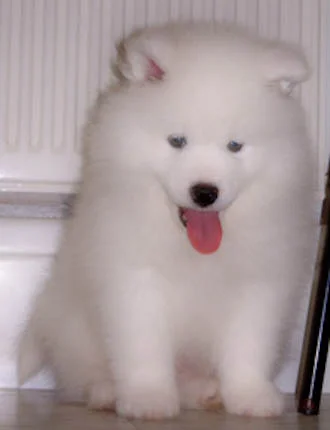
Samoyed
Other names: Bjelkier, Samoiedskaya Sobaka, Nenetskaya Laika, Samoieda, Samoiedskaïa Sabaka, \r\nSammy, Smiling Sammy, Sami, Samoyedskaya, Nenetskaya Laika
Herding, watchdog, sledding, carting.
- Origin
- Russia
- Size
- Large
- Height · Male
- 54–60 cm
- Height · Female
- 50–56 cm
- Weight · Male
- 26–30 kg
- Weight · Female
- 23–28 kg
- Life expectancy
- 10–12 years
- Litter
- 5–9 puppies
- FCI
- FCI group 5 · 5 · n.º 212
- AKC
- Working Group · #67
Traits
Activity
Social
At home
Care
Training
Guarding
Temperament
Friendly, open, alert and lively. The hunting instinct is very slight. Never shy nor aggressive. Very social and cannot be used as guard dog.
History
The name Samoyed derives from the Samoyed Tribes in Northern Russia and Siberia. In Southern parts of the area they used white, black and brown parti-coloured dogs as reindeer herders ; in the northern parts the dogs were pure white, had a mild temperament and were used as hunting- and sledge dogs. The Samoyed dogs lived close to their owners, they even slept within the shelters and were used as heaters. The British zoologist Ernest Kilburn Scott spent three months among Samoyed Tribes in 1889. Returning to England he brought with him a brown male puppy called « Sabarka ». Later he imported a cream coloured bitch called « Whitey Petchora » from the western side of the Urals and a snow white male called « Musti » from Siberia. These few dogs and those brought by the explorers are the base for the western Samoyed. The first standard was written in England in 1909.
Care
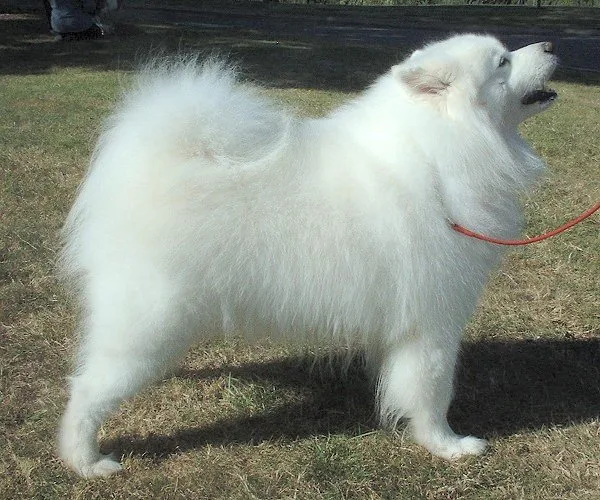
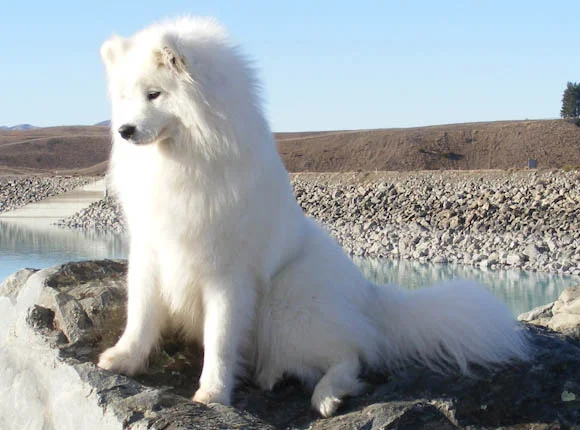
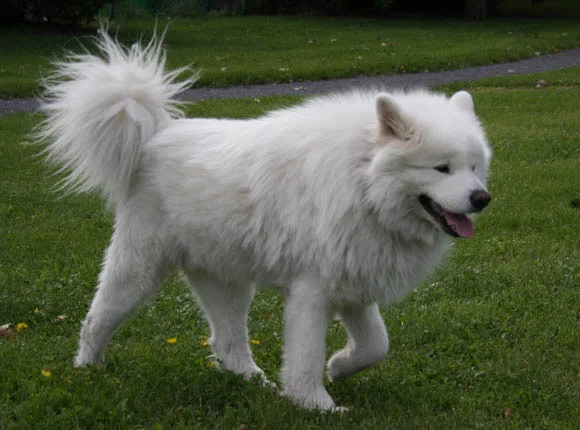
The Samoyed is active and needs a good workout every day, either in the form of a long walk or jog or a vigorous play session. She prefers to live indoors with her human family. Her thick coat needs brushing and combing two to three times a week, daily when shedding.
The Samoyed does best in cooler climates, but will do okay in warmer weather. Proper exercise is required as this breed can be lively, but proper water and rests must be given as this breed has a wooly coat.
Attention, exercise, grooming and training.
Health
The Samoyed has a very thick coat, which requires much grooming. They shed heavily during warmer seasons and should be regularly brushed. The coat of this dog tends to trap dirt, but with regular brushing it should release easily.
Training
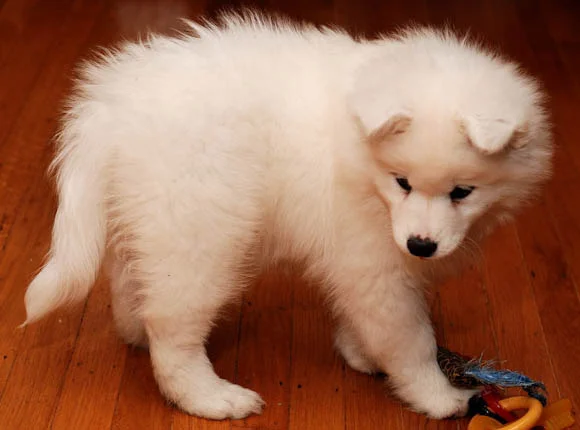
The training of this dog is difficult to make because it is independent and stubborn. The training must begin from an early age and must be firm, consistent, well ballanced, varied for not getting the dog bored, and must be done with a lot of patience and respect without being severe or harsh, with calm key, with a soft voice to obtain the wanted result. It must be socialized from an early age with other animals from the household because its hunter instincts are strong and can appear anytime, transforming the smaller animals from courtyard in prey.
Coat & grooming
The fur of this dog must be combed more often in the moutling periods to remove the dead and detached hair bristles, in the rest of the time it shoul be brushed depending on how much hair is falling.
Fun facts
Some like to roam. The fluffy double coat needs frequent brushing, but tends to stay white without bathing. Sheds heavily during shedding periods. Has a reputation as a chewer. May become very destructive if left alone for many hours at a stretch. General