Dogs
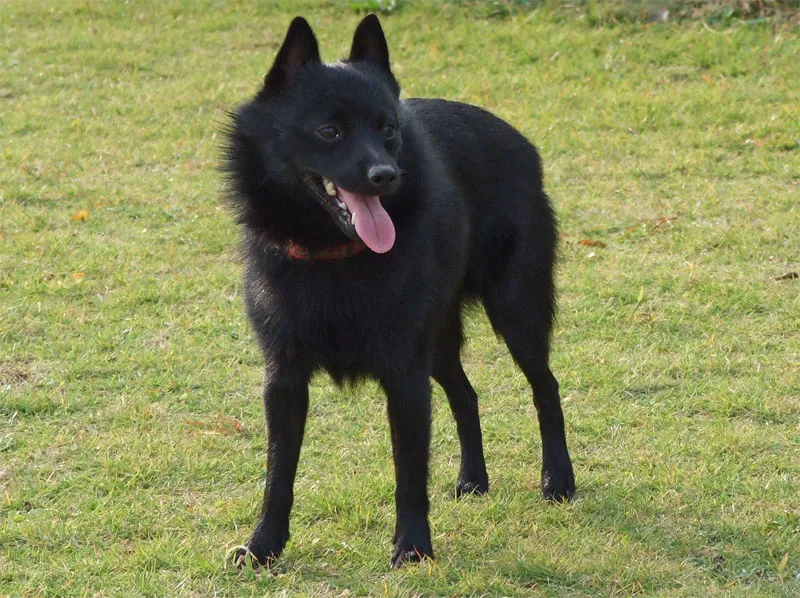
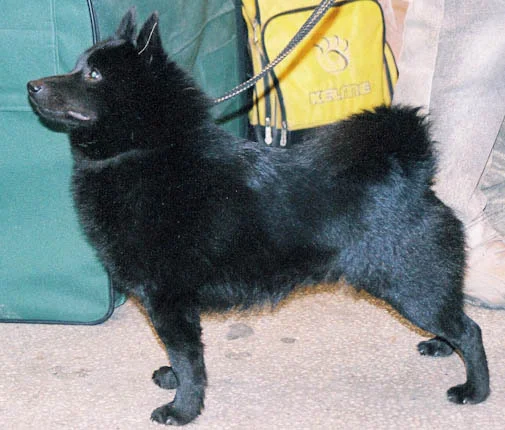
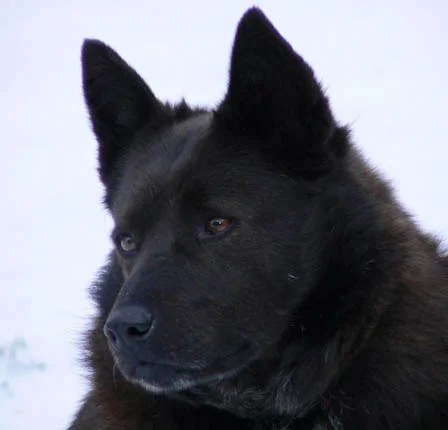
Schipperke
Other names: Spitzke, Spits, Spitske
Watchdog, guarding, agility, competitive obedience, performing tricks.
- Origin
- Belgium
- Size
- Small
- Height · Male
- 32–33 cm
- Height · Female
- 31–32 cm
- Weight · Male
- 5–9 kg
- Weight · Female
- 3–5 kg
- Life expectancy
- 12–16 years
- Litter
- 3–7 puppies
- FCI
- FCI group 1 · 1 · n.º 83
- AKC
- Non-Sporting Group · #78
Traits
Activity
Social
At home
Care
Training
Guarding
Temperament
An energetic and jolly breed, this dog will protect his home and family from intruders. Does great in a home with children, but should be socialized as a pup around other animals as they can be territorial. Barking at the sight of intruders, two-legged or four-legged, this breed is great for alert purposes.
History
In the Flemish dialect, Schipperke means « little shepherd ». The common ancestor of the Belgian Shepherds and the Schipperke was probably a sheepdog called Leuvenaar, an early breed, usual1y rather small and black. The Schipperke's origins go back to the 17th century. About 1690, the Schipperke was the favourite dog of working people and cobblers from the St.Gery quarter of Brussels, who used to organise competitions to show off the intricately worked brass collars with which they adorned their dogs. Its tail was completely docked, a fashion which seems to have existed since the 15th century. It was renowned as a catcher of mice, rats, moles and other vermin. The Schipperke was shown for the first time in 1882 in the town of Spa. It became fashionable thanks to Queen Marie-Henriette of Belgium. It was introduced into Great Britain and the U.S.A. in 1887. The first standard was drawn up in 1888 by the breed club, founded that year, which is the oldest breed club in Belgium. Over the years great efforts have had to be made to unify the type. Indeed at that time there was discussion about the different varieties coming from Anvers, Louvain and Brussels.
Care
The active nature of this breed makes exercise, both- mental and physical -imperative. His small stature makes getting that exercise fairly easy, however. Either a vigorous game in the yard or a moderate walk on leash will usually suffice to meets his needs. The Schipperke should not live outdoors. His double coat needs weekly brushing, more when shedding.
A fenced yard would be best for this high-energy breed, but will do well in apartment life. The Schipperke loves to run and is tireless, so they do require regular walks and play times, preferably off lead in a yard or park.
Exercise, grooming, and socialization.
Health
Combing or brushing with a firm bristle brush should be sufficient for this clean breed. Usually done on its own, dry shampooing is recommended only when necessary. Sheds heavily, also known as "blows" the coat up to three times per year. Dropping the undercoat, this breed requires much maintenance during this period.
Training
It can be easily trained because it is a smart dog which wants to make pleasure to its master. It barks loudly at any movement and that is why it must be tought when it needs to bark more and less.
Coat & grooming
The fur needs little care, a casual brushing is enough.
Fun facts
Schipperkes are low-maintenance dogs, shedding once or twice a year, and otherwise requiring only occasional brushing. They do not have a doggy odor. Can be difficult to housebreak. This breed must be kept leashed outside or in a secure fenced yard, as th