Dogs
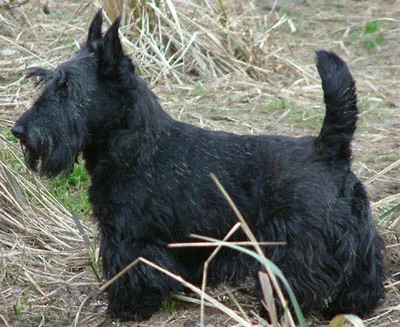
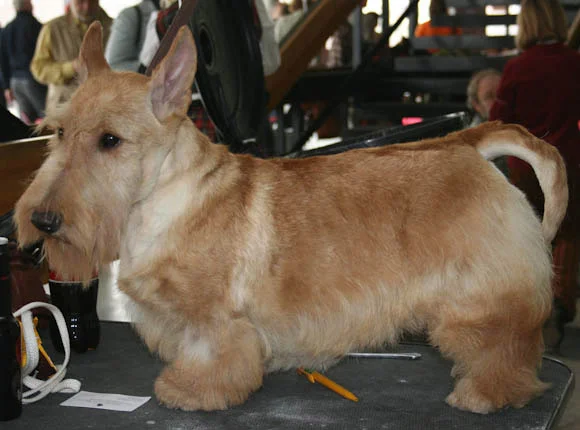
Scottish Terrier
Other names: Aberdeen Terrier, Scottie (Dog)
Hunting, watchdog, earthdog, agility, performing tricks.
- Size
- Toy
- Height · Male
- 26–28 cm
- Height · Female
- 24–25 cm
- Weight · Male
- 9–11 kg
- Weight · Female
- 8–10 kg
- Life expectancy
- 11–13 years
- Litter
- 3–5 puppies
- FCI
- FCI group 3 · 3 · n.º 73
- AKC
- Terrier Group · #43
Traits
Activity
Social
At home
Care
Training
Guarding
Temperament
The Scottish Terrier will go anywhere and do anything. They have a dominant personality and a tendency to be territorial. The Scottie may show aggression to other dogs and cats if they are not socialized properly at an early age. They are good watchdogs and will not bark without good reason. They are not tolerant of unruly and rambunctious young children.
History
The Scottish Terrier Club was formed in 1882, a year after the first standard for the breed was drawn up, and just three years after the start of the breed as we know it today by Capt Gordon Murray. He was strongly supported by the founder and first chairman of the Kennel Club, Mr Sewallis Evelyn Shirley.
The public image of this short-legged terrier from the Highlands is often that of a dour Scot, but to his family and friends he is affectionate and cheerful although he will soon rouse himself at the slightest sound, with protectiveness as he prepares to guard his house and home.
Care
This is a dog on the lookout for adventure, and she needs some excitement and exercise in her life every day. This can take the form of a moderate walk on leash, a boisterous game or an off-leash exploration in a safe area. She is best suited as a house dog with access to a yard. Her wire coat needs combing two to three times weekly, plus shaping every three months. Shaping for pets is by clipping.
The Scottish Terrier is always ready for an adventure and activity. They require long walks, stimulation, and play. The Scottie does not do well in extremely warm climates. They love to play ball and derive great pleasure from playing fetch. They do well in apartment living provided they are exercised appropriately. The Scottie will become bored and destructive if they do not receive stimulation and exercise and may dig and bark excessively.
Grooming, socialization, training, and supervision with small children.
Health
The Scottish Terrier requires brushing twice weekly to keep the coat tangle free. They do require grooming and trimming to keep their distinctive look. The Scottie is highly prone to cancer of the bladder. They also may suffer from cataracts, hypothyroidism, and Von Willebrand Disease. This breed is especially sensitive to fleas and many have skin problems.
Training
The training of the dog must be made by a person with experience in training. It must be consistent, well-balanced, strong, made with patience because it is an independent dog
Coat & grooming
The chest, head and legs are generally trimmed. The rest of the fur must be combed weekly and trimmed 2-3 times a year. The beard and whiskers must be brushed daily for not to remain food litters in them.
Fun facts
Even a pet Scottie's coat needs a lot of regular attention to keep it looking its best. In addition to twice-weekly brushing, the coat needs to be clipped about six times a year. Some pet owners use a professional groomer to do this, but maintenance groom