Dogs
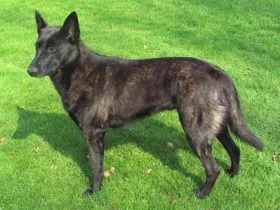
Short-haired Dutch Shepherd Dog
Other names: Holland Shepherd, Dutch Shepherd, Hollandse Herder
- Origin
- Netherlands
- Size
- Large
- Height · Male
- 57–62 cm
- Height · Female
- 55–60 cm
- Weight · Male
- 27–30 kg
- Weight · Female
- 26–28 kg
- FCI
- FCI group 1 · 1 · n.º 223
Traits
Activity
Social
Training
Guarding
Temperament
Very loyal and reliable, always alert, watchful, active, independent, with persistence, intelligence, prepared to be obedient and gifted with the true shepherding temperament. The Dutch Shepherd Dog works willingly together with its owner and he deals independently with any task which is assigned to him.
When herding larger flocks he must have the capacity to work together with several other dogs
History
Originally the main function of the Dutch Shepherd Dog was that of a shepherd?s dog in the countryside. From early times, the Dutch had an arable culture that was ? among other things ? maintained by flocks of sheep. The dogs had to keep the flock away from the crops, which they did by patrolling the borders of the road and the fields. They also accompanied the flocks on their way to the common meadows, markets and ports.
At the farm, they kept the hens away from the kitchen garden, they herded the cows together for milking and pulled the milk carts. They also alerted the farmers if strangers entered the farmyard. Around 1900, sheep flocks had for the greater part disappeared in the Netherlands. The versatile skills of the Dutch Shepherd Dog made him suitable for dog training, which was then starting to become popular. Thus he started on a new career as a police dog, as a search- and tracking dog and as a guide dog for the blind. He is, however, still capable of herding sheep. The breed?s first standard dates from 12 June 1898.
Care
The Dutch Shepherd breed is not recommended for those with sedentary lifestyles. The Dutch Shepherd thrives on exercise, activity, and having a job to do. They are not recommended for apartment living and do best with a large securely fenced yard or rural setting. Physical and mental stimulation is absolutely crucial. They excel in agility, herding, obedience competition, and field trailing. Dutch Shepherd's also make excellent walking and jogging companions provided they are securely leashed.
Health
The short-haired and long-haired varieties of coat require regular brushing to remove dead and loose hair. The wire-haired coat must be professionally plucked twice a year. Bathing should only be done wehn absolutely necessary. Due to the rarity of the Dutch Shepherd breed there are no known health issues.
Training
They are relatively easy to train because they are attentive and they learn fast. They are good competitors in agility contests: flyball or training.
Coat & grooming
The short and long haired varieties require regular combing to remove the dead hair bristles. The variety with the harsh fur doesn't require brushing.
Short-haired Dutch Shepherd Dog breeders
All breeders →No verified breeders for this breed yet. Are you a breeder? Register.
Looking for more breeders? Ask the Clube Português de Canicultura (CPC) for the list of registered breeders of your breed. Visit, meet the parents and ask for health tests.