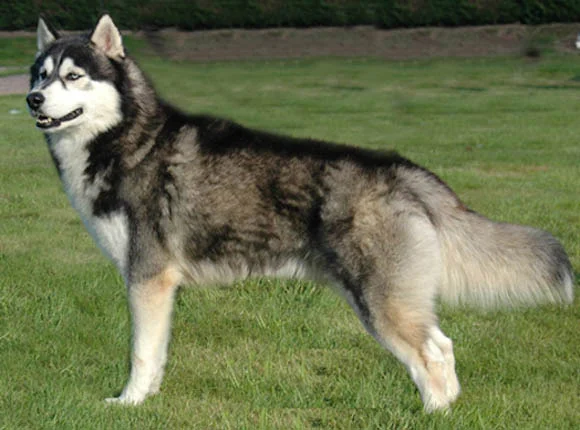
Dogs
Siberian Husky
Other names: Husky, Arctic Husky, Siberian Husky, Chukcha, Chuksha, Sibe
Sledding, carting, and sled racing.
- Origin
- Russia
- Size
- Large
- Height · Male
- 53–60 cm
- Height · Female
- 50–56 cm
- Weight · Male
- 20–28 kg
- Weight · Female
- 15–23 kg
- Life expectancy
- 11–13 years
- Litter
- 6–8 puppies
- FCI
- FCI group 5 · 5 · n.º 270
- AKC
- Working Group · #23
Traits
Activity
Social
At home
Care
Training
Guarding
Temperament
The characteristic temperament of the Siberian Husky is friendly and gentle, but also alert and outgoing. He does not display the possessive qualities of the guard dog, nor is he overly suspicious of strangers or aggressive with other dogs.
Some measure of reserve and dignity may be expected in the mature dog. His intelligence, tractability, and eager disposition make him an agreeable companion and willing worker.
Care
This is an active dog, bred to run tirelessly for miles. He needs ample daily exercise, either in the form of a long jog or a long run off leash in a safe area. He also loves to pull and enjoys cold weather. His coat needs brushing one or two times a week, daily during periods of heaviest shedding.
The Siberian Husky has an innate and deep desire to run. They do best with a large securely fenced yard. If they are left alone for extended periods of time they will become bored which leads to digging and destruction. They make excellent walking and jogging companions provided they are very securely leashed and the climate is not too hot. The Husky is not recommended for apartment dwelling unless they are exceedingly well trained and sufficiently exercised.
Exercise, fenced yard, leash, job or organized activity to do, socialization and training.
Health
The Siberian Husky is by nature clean and free from body odor. They require daily brushing to minimize excess loose hair, tangles, and mats. Bathing should only be done when absolutely necessary with a mild shampoo. The Siberian Husky is prone to hip dysplasia, cataracts, and skin allergies. It is extremely vital that they do not become overheated.
Training
It is an independent dog usedfrom everlastingwith the sleigh and it is harder to convince it to follow other orders, especially if it doesnt get their point. It's reccommended that thee training of this dog to be made by a person with experience, to be consequent. It needs socialization since an early age with other animals from the household.
Coat & grooming
The fur reqiures a brush more often during the moulting period, in rest, the brushing can be ocassionally.
Fun facts
The coat doesn't need much care except during the twice yearly shedding season, when the shedding hair needs to be combed out. Beware of eye problems (including PRA, juvenile cataracts, corneal dystrophy, and crystalline corneal opacities) and zinc respon