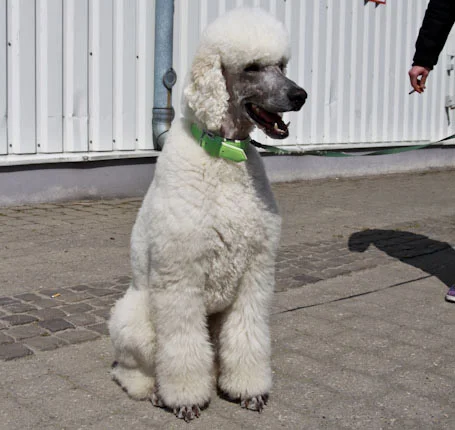
Dogs
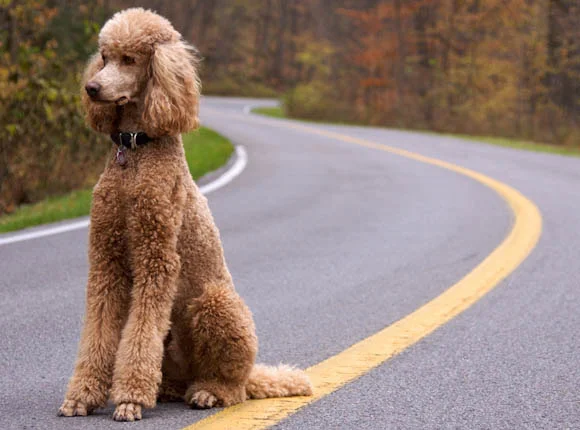
Standard Poodle
Other names: Standard Poodle, Caniche, Barbone, Chien Canne, Tea Cup Poodle, French Poodle, Pudle, Teddy Poodle
Watchdog, retrieving, agility, competitive obedience, performing tricks.
- Origin
- Germany
- Size
- Medium
- Height · Male
- 45–60 cm
- Height · Female
- 45–60 cm
- Weight · Male
- 20–32 kg
- Weight · Female
- 20–32 kg
- Life expectancy
- 10–14 years
- Litter
- 3–8 puppies
- FCI
- FCI group 9 · 9 · n.º 172
- AKC
- 1+3 Non-Sporting Group 4 Toy Group · #8
Traits
Activity
Social
At home
Care
Training
Guarding
Temperament
A dog renowned for its loyalty, capable of learning and being trained thus making it a particularly pleasant companion dog.
History
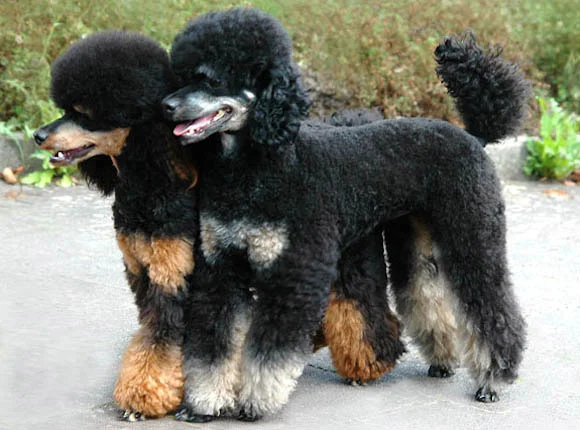
Etymologically, the French word ?caniche? (Poodle) comes from ?cane?, the French word for a female duck. In other countries, the name of the breed is associated with splashing around in water. Originally, this dog was used for wildfowling. It descends from the Barbet of which it has conserved many characteristics. In 1743, it was called the ?caniche?: the female of the barbet in French. Thereafter the Barbet and the Caniche (Poodle) were gradually separated. Breeders worked hard to obtain original subjects of uniform colour. The Poodle became very popular as a companion dog because of its friendly, joyful and loyal character and also because of its four sizes and different colours which everyone can choose according to preference.
Care
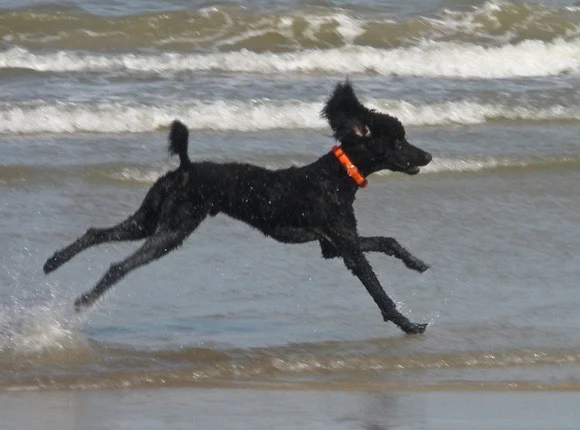
All Poodles need a lot of interaction with people. They also need mental and physical exercise. A brief but challenging obedience or play session, combined with a walk, should be part of every Poodle's day. Standard Poodles will need more exercise and may especially enjoy swimming. No Poodle should live outdoors. The show poodle should preferably be brushed every day or weekly for shorter coats. Poodle hair, when shed, does not fall out but becomes caught in the surrounding hair, which can cause matting if not removed. The pet clips are easier to maintain and can be done every four to six weeks.
The Poodle enjoys swimming, family play sessions, and securely leashed walks. They greatly benefit from regular opportunities to romp and run off lead in a safe area. Poodles will do okay in an apartment or condominium dwelling provided they are sufficiently exercised and stimulated to help curtail their tendency to excessively bark, and to keep them physically fit.
Attention, grooming, protection from predators or rough play, socialization, some exercise and training.
Training
This dog is very easy to train because it is very intelligent, it easily learns, it is eager to learn. With a gentle but consistent training, it will learn everything it is required.
Coat & grooming
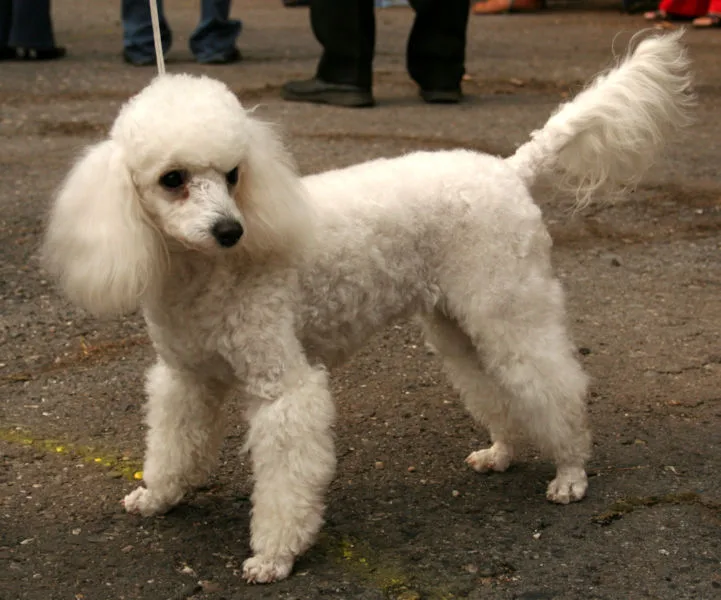
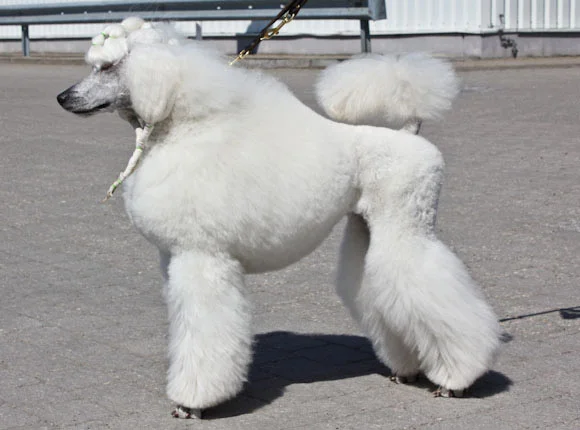
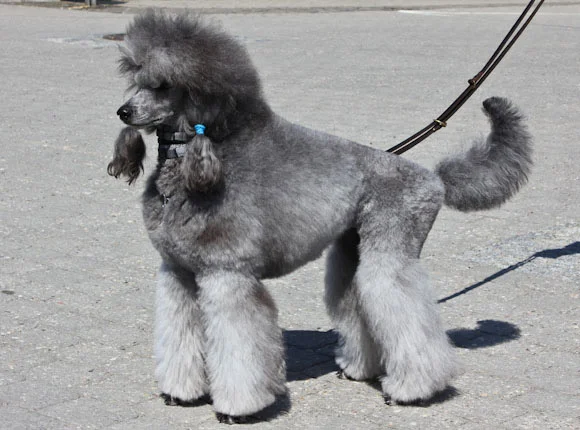
The fur of this companion dog must be trimmed carefully by a specialist, leaving them long hair on head, ears and feet. This dog doesn't moult. They will be washed regularly and the ears will be kept clean for not getting infected. The fur of the dog for exhibition requires a much more careful and expensive grooming. It can have a traditional haircut in more than 50 variants. Although it has decorative aspect, this one derive from the utilitarian function of the fur, which is cut is such way to swim easier and faster and to protect it against the cold. The both hair tufts from the back helps it to prevent the rheumatism, and the one from the tip of the tail helps at locating the dog under water.
Fun facts
The coat needs regular attention and professional clipping every few months. Hair should be removed from inside the ears. Prone to bloat, hip dysplasia, runny eyes, ear infections, PRA, and von Willebrand's Disease. Buy only from OFA, CERF and VWD certifi