Dogs
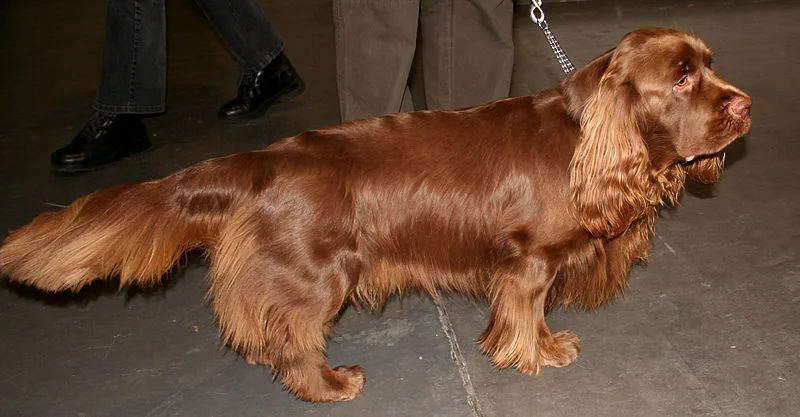
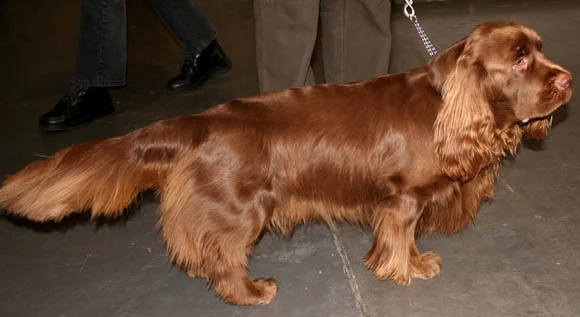
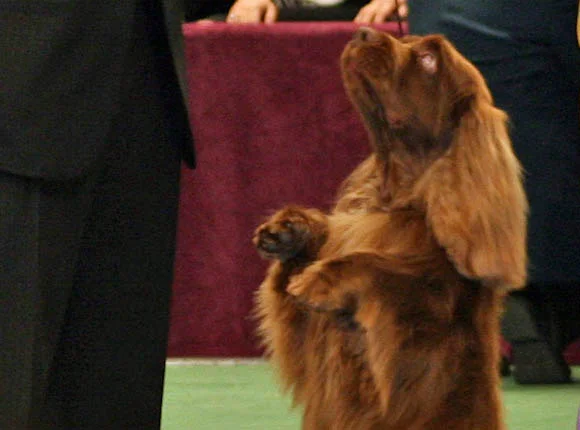
Sussex Spaniel
Other names: Sussex
Hunting, tracking, retrieving, watchdog.
- Size
- Small
- Height · Male
- 38–41 cm
- Height · Female
- 33–38 cm
- Weight · Male
- 20–23 kg
- Weight · Female
- 16–20 kg
- Life expectancy
- 11–13 years
- Litter
- 5–6 puppies
- FCI
- FCI group 8 · 8 · n.º 127
- AKC
- Non-Sporting Group · #139
Traits
Activity
Social
At home
Care
Training
Guarding
Temperament
Natural working ability, gives tongue at work in thick cover. Kindly disposition
Care
The Sussex needs daily exercise, but her needs can be met with a good walk on lead or a short romp in the yard. Given the chance, she will appreciate a longer foray into the field. She generally does best as a house dog that also has access to a yard. The coat needs brushing and combing two to three times a week, plus scissoring every few months.
The Sussex Spaniel commonly battles weight problems so he should have sufficient exercise daily. Swimming and retrieving are sports this breed really enjoys. This dog does okay without a yard but loves a brisk run.
Grooming, socialization and training.
Health
The medium length coat of this breed should be brushed and/or combed regularly. The Sussex Spaniel is prone to ear infections and dirty ears so ear cleaning is of significant importance. Plucking dead hair is recommended and should be performed only by someone experienced.
Training
With a consequent, gentle training the wanted results can be obtained pretty easy because it learns easily. It must be taught to bark less when the guests are announced.
Coat & grooming
The fur should be brushed and combed regularly and if it is necessary, the old hair will be removed by trimming. It will be removed the excess hair, grown between the pads of the legs and from ears.
Fun facts
Bays sometimes when hunting (this is the only spaniel to do so). May howl a lot when left alone. Prone to ear infections, so the ears should be cleaned regularly. Also known to have hip dysplasia and back problems. Do not overfeed as this breed tends to g