Dogs
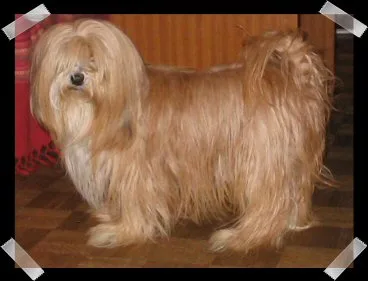
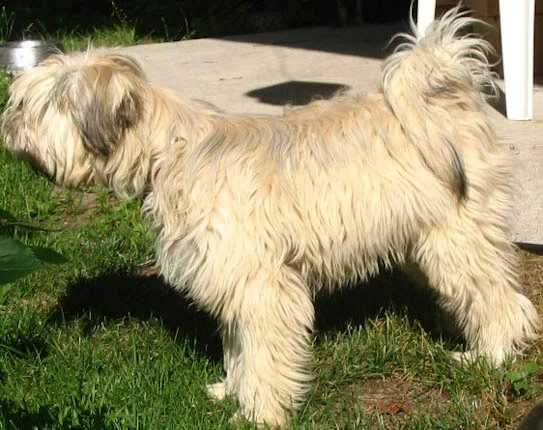
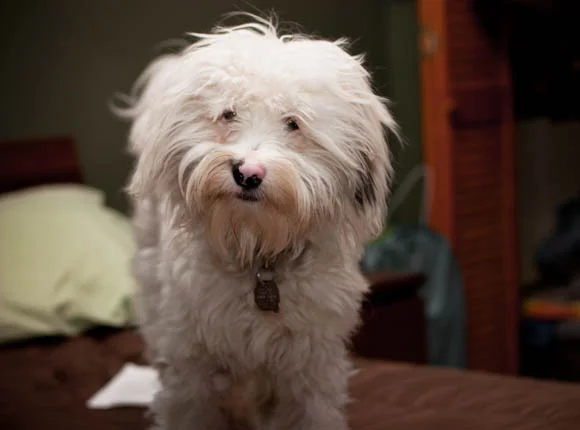
Tibetan Terrier
Other names: Dhokhi Apso, Tsang Apso
Watchdog, agility, and obedience.
- Size
- Small
- Height · Male
- 36–41 cm
- Height · Female
- 30–36 cm
- Weight · Male
- 8–13 kg
- Weight · Female
- 7–10 kg
- Life expectancy
- 12–15 years
- Litter
- 5–8 puppies
- FCI
- FCI group 9 · 9 · n.º 209
- AKC
- Non-Sporting Group · #91
Traits
Activity
Social
At home
Care
Training
Guarding
Temperament
Lively, good-natured. Loyal companion dog with many engaging ways. Outgoing, alert, intelligent and game; neither fierce nor pugnacious. Sparing of affection to strangers.
History
In spite of the name, the Tibetan Terrier is not a terrier but a herding dog, doubling as a guard for traders as they journeyed to and from China. It succeeded in his job not so much by size but through the awe in which he was held. This is believed to be the original Holy Dog of Tibet. It is said to be even livelier than the other Tibetan breeds in Group 9, his energy and enthusiasm balancing his ability as a miniature guard dog along the lines of a small Old English Sheepdog.
Care
The Tibetan Terrier likes to run and explore, and needs daily exercise in a safe area. His needs can also be met by a vigorous game in the yard or a moderately long walk on leash. He is best as an indoor, or indoor/outdoor, dog. His long coat needs thorough brushing or combing once or twice a week.
The Tibetan Terrier requires daily regular exercise in the form of a long walk or play session. They are suited for apartment living provided they are given sufficient exercise. Tibetan Terriers are energetic and strong and do very well in agility. They are excellent hiking companions and enjoy a vigorous run in a securely fenced yard or safe open space.
Attention, grooming, moderate exercise, positive training, and socialization.
Health
The Tibetan Terrier requires extensive grooming. They must be combed several times a week to prevent tangles and remove loose hair. The coat must never be dry combed. It is important to mist the coat with conditioner before combing to prevent breakage. Bathing should only be done when absolutely necessary using a mild shampoo. Dry shampooing may be done as needed. Tibetan Terriers are prone to hip dysplasia, hernias, cataracts, lens luxation, and progressive retinal atrophy.
Training
It's an intelligent dog, sensitive to the voice tone and that's why with a calm, gentle but consequent training the wanted results can be achieved.
Coat & grooming
The fur should be brushed daily for not geting tangle and they shoul be washed regularly. The hait increased in excess wil be removed from the ears or between the pads of their feet.
Fun facts
Tibetan Terrier bloodlines in the United States vary in terms of height, coat, and personality. Check with the breeder about any particular litter's genealogy. Buy only from OFA and CERF certified stock. The long coat needs a lot of attention, so many own