Dogs
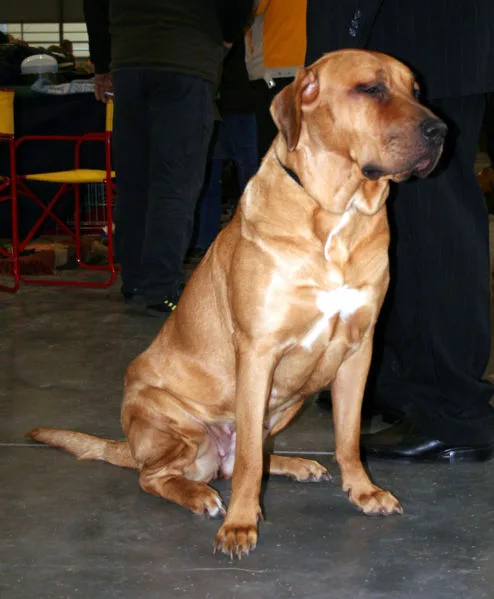
Tosa Inu
Other names: Tosa Inu,Tosa Ken, Japanese Fighting Dog, Japanese Mastiff, Tosa Fighting Dog,Japanese Tosa, Mastiff Japonês\r\n
- Origin
- Japan
- Size
- Large
- Height · Male
- 60–65 cm
- Height · Female
- 55–60 cm
- Weight · Male
- 80–90 kg
- Weight · Female
- 75–85 kg
- Life expectancy
- 10–12 years
- Litter
- 6–12 puppies
- FCI
- FCI group 2 · 2 · n.º 260
Traits
Activity
Social
Training
Guarding
Temperament
The temperament is marked by patience, composure, boldness and courage.
History
Japan has a long history of dog fighting, beginning in the 14th century. With such a history in the background, this breed was produced as a hybrid of Shikoku-ken and Western breeds. Named after the area where they were bred, these dogs are sometimes called "Japanese Mastiffs". The Western dogs used for creating the breed were Bulldogs (1872), Mastiffs (1874), German Pointers (1876) and Great Danes (1924), all of which were used to improve the breed by sequential mating. According to some accounts, St.Bernards and Bull Terriers were also involved, but it is not known in what years they were used. The Tosa's established features of stamina and the fighting instinct typically found in Mastiffs may be attributed to the involvement of such breeds.
Care
A large yard is best for this large and fun loving breed. Given the proper exercise, this dog will do okay in apartment life but should have exercise area available. The Tosa Inu makes a great jogging or running companion and does well on long walks.
Attention, socialization, and training.
Health
Fairly easy to groom, the Tosa Inu is a light shedder. An occasional brushing should be sufficient for this shorthaired breed. Muzzle area should be cleaned as necessary as this breed does tend to drool extensively. Only bathing when necessary.
Training
The training must be done by an experienced person, who knows how to make the dog to understand who is the master. The training must be firm without being cruel or hard, done calmly, patiently because it is sensitive to the voice tone.
Coat & grooming
The fur of this dog is being beautifully kept with an occasional brushing, more frequently in the moulting period. This dog does not leave slobber.