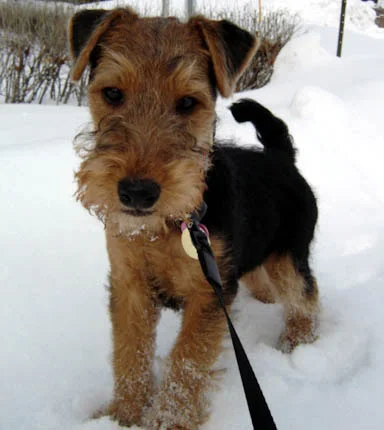
Dogs
Welsh Terrier
Other names: Welshie
Hunting, tracking, watchdog, earthdog, agility, performing tricks.
- Origin
- Wales
- Size
- Small
- Height · Male
- 37–39 cm
- Height · Female
- 36–37 cm
- Weight · Male
- 9–10 kg
- Weight · Female
- 8–9 kg
- Life expectancy
- 12–14 years
- Litter
- 3–6 puppies
- FCI
- FCI group 3 · 3 · n.º 78
- AKC
- Terrier Group · #89
Traits
Activity
Social
At home
Care
Training
Guarding
Temperament
Intelligent, sweet, lively, and eager to please, the Welsh Terrier does well in a family environment. He is generally good around children providing the children to not overly pester, and does well with other animals. This breed should always be properly socialized at an early age.
History
The Welsh Terrier is a breed with a truly working background, he is perhaps rather less exuberant than some of the other members of his group. Like so many of his cousins, he was originally used in hunting the fox, badger and even otter. The Welsh and Lakeland Terriers, which have considerable similarity, may well have had a common origin prior to the Roman invasion of Britain when their Celtic owners retreated to the Welsh mountains and the Lake District.
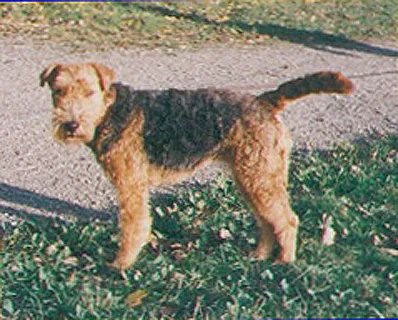
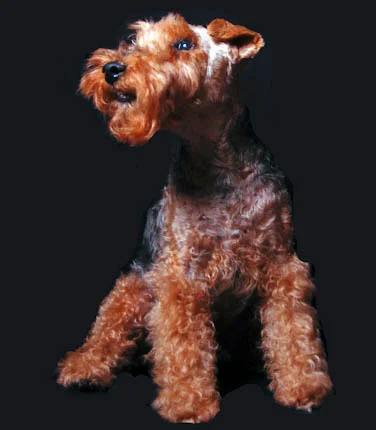
He is a neat, workmanlike dog with a tight wiry coat normally of black and tan.
Care
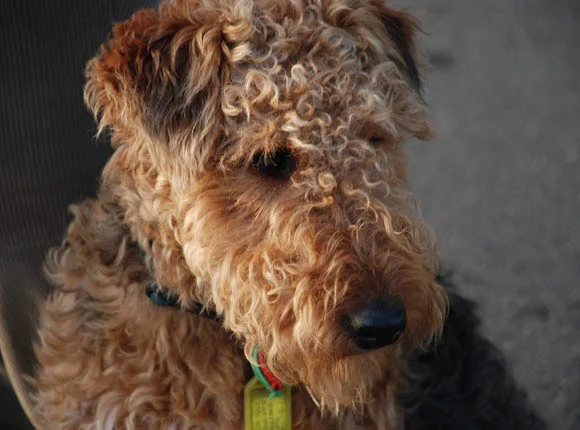
The Welsh terrier needs a moderate walk on leash every day or an invigorating play session. If allowed to run off leash, he should be in a safe area because he tends to hunt. The Welsh does best when allowed access to house and yard. His wiry jacket needs combing two to three times weekly, plus shaping every three months. Shaping for pets is by clipping or stripping.
The Welsh Terrier is a very energetic breed, however he does do well in a home environment. A small yard is best as this breed loves to play catch and would do well in a fenced in yard. However, he can do well without a yard if given sufficient exercise.
Exercise, firm but positive training, grooming and socialization.
Health
The Welsh Terrier should have at least weekly brushing to remove loose or dead hair. Regular bathing is not necessary, however a wipe down with a damp or dry washcloth should remove most dirt, if any. The beard of this breed should be cleaned regularly.
Training
By some opinions, this dog is the easiest terrier to train because it is intelligent, it understands easily what is required and is more tolerant than other Terriers. However the training must be consequent, strong and varied enough to attract the dog. It likes to play with the ball, to run and play without a leash in a larger space.
Coat & grooming
The fur should be trimmed 2-3 times a year, and as to the rest it will be brushed weekly.
Fun facts
Can be difficult to housebreak, especially bitches. Coat needs regular attention. A little calmer than the other long-legged terriers. Likes to chase after things, so don't let off lead except in an enclosed area unless the dog is very well trained. Likes